Choosing the right knife for chopping vegetables can speed up prep in any kitchen. This guide highlights five highly rated options that balance sharpness, ergonomics, and durability. All selections are well-suited to slicing, dicing, mincing, and julienne tasks, helping home cooks prep produce with confidence.
| Product | Brand | Key Benefit |
|---|---|---|
| Farberware Edgekeeper 8-Inch Chef Knife | Farberware | Self-sharpening edge with ergonomic handle |
| Cutluxe Santoku 7″ | Cutluxe | Razor-sharp blade at 14-16° per side |
| PAUDIN Nakiri 7″ | PAUDIN | Ultra sharp edge for clean vegetable cuts |
| imarku Japanese Chef Knife 8″ | imarku | High-carbon stainless steel, ergonomic Pakka handle |
| HOSHANHO 7″ Nakiri | HOSHANHO | Vacuum heat-treated hard blade for long-lasting sharpness |
Product selections are designed to cover a range of knife styles commonly used for vegetables, including chef, santoku, and nakiri knives. The list emphasizes blades that stay sharp, comfortable handles for extended prep, and durable construction suitable for daily kitchen use.
Farberware Edgekeeper 8-Inch Chef Knife

The Farberware Edgekeeper 8-Inch Chef Knife combines versatility with a built-in self-sharpening feature. Its Edgekeeper technology ensures the blade is ready for vegetable chopping with each use, reducing downtime from dull blades. The ergonomic handle provides a comfortable grip during long prep sessions, while the forged construction offers durability for slicing, dicing, and mincing tasks.
Ideal for users who want a reliable all-purpose knife that can handle a wide range of vegetables, from root to leafy greens. The self-sharpening sheath helps maintain edge retention between uses, making it a low-maintenance option for busy kitchens.
Cutluxe Santoku Knife – 7″ Chopping Knife

The Cutluxe 7″ Santoku is designed for precise vegetable prep, offering a versatile all-purpose blade suitable for chopping, dicing, and mincing. The razor-sharp edge is ground at 14-16 degrees per side, promoting clean, accurate cuts. A full tang construction adds balance and strength, while a triple-riveted pakkawood handle provides a firm, comfortable grip during extended prep sessions. A protective sheath aids safe storage when not in use.
PAUDIN Nakiri Knife – 7″

The PAUDIN 7″ Nakiri is crafted for vegetable-focused prep with a flexible yet sturdy blade. Constructed from high-carbon stainless steel (56+ hardness), it provides an ultra-sharp edge for effortless slicing, dicing, and mincing. The ergonomic pakkawood handle balances the blade and offers a comfortable grip, helping maintain control during frequent, precise vegetable cuts. This knife is easy to re-sharpen and maintain.
imarku Japanese Chef Knife – 8 Inch
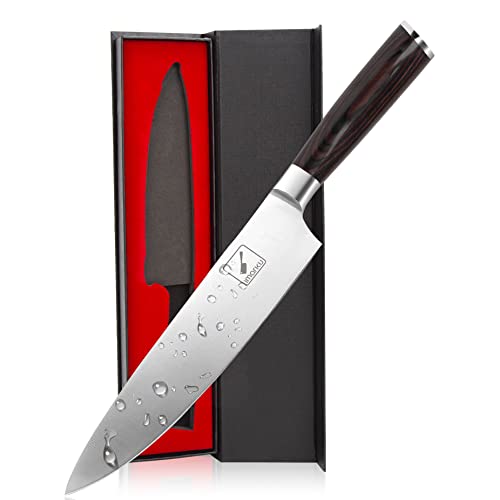
The imarku 8-Inch Chef Knife features a high-carbon stainless steel blade with 0.6-0.75% carbon, delivering strength and edge retention. Classified as a multipurpose blade, it excels at slicing, dicing, and chopping vegetables. The ergonomic Pakka handle reduces fatigue during extended prep, while the blade’s hardness (HRC 56-58) supports durable performance. This knife is marketed as a versatile kitchen workhorse suitable for daily meal prep.
HOSHANHO 7 Inch Nakiri Knife

The HOSHANHO 7″ Nakiri is designed for vegetable-focused prep with a high-carbon stainless steel blade treated to 60HRC after vacuum heat treatment. The 15-degree edge angle ensures a sharp, clean cut with minimal effort. An ergonomic pakkawood handle balances weight and blade, reducing fatigue during extended chopping sessions. This knife is built to maintain sharpness and deliver precise vegetable slices over time.
Buying Guide: Key Purchase Considerations
- Blade style: Nakiri and Santoku knives excel at vegetables; Chef knives offer broader utility. Choose based on preferred cutting technique and kitchen tasks.
- Blade material and hardness: High-carbon stainless steel offers sharpness and durability, but consider corrosion resistance and maintenance needs.
- Edge geometry: A 14-16 degree per side edge provides a fine balance of sharpness and maintenance for everyday vegetable prep.
- Handle design: Ergonomic, slip-resistant handles reduce fatigue and improve control during long chopping sessions.
- Maintenance: Some knives include self-sharpening features or protective sheaths. Regular honing and occasional sharpening extend blade life.
- Weight and balance: Lighter blades reduce fatigue, while well-balanced blades improve precision in chopping and dicing tasks.
- Safety features: Look for full tang construction, secure handles, and blade guards for safe storage and use.
- Set vs. single blade: A multi-knife set offers variety for different tasks but may be more than needed; a single high-performance blade can cover most vegetable prep needs.