Finding a 3D printer that’s well-suited for food-related projects means focusing on printers and materials that support food-safe output, reliable extrusion, and easy cleanup. This guide highlights five strong options, spanning both dedicated food-grade filaments and versatile printers capable of handling specialized, culinary-ready designs. Explore printers and consumables designed to help you create safe, durable food-grade parts, prototypes, and customized kitchen tools.
| Product | Brand | Notes |
|---|---|---|
| CARBON Certified Food Grade PLA+ Filament | Comfy Materials | FDA-listed, food-contact safe, high dimensional accuracy |
| YXPOLYER PLA Filament Food Grade 1.75mm | yxpolyer | FDA-compliant, enhanced toughness, optimized for speed |
| FLASHFORGE Adventurer 5M 3D Printer | FLASHFORGE | Automatic leveling, high-speed CoreXY build |
| FLASHFORGE AD5M 3D Printer Fully Auto Calibration | FLASHFORGE | One-click leveling, all-metal motion, reliable speed |
| Anycubic Kobra S1 Combo | ANYCUBIC | Multi-color printing, fast speed, built-in dryer |
CARBON Food Grade PLA+ Filament
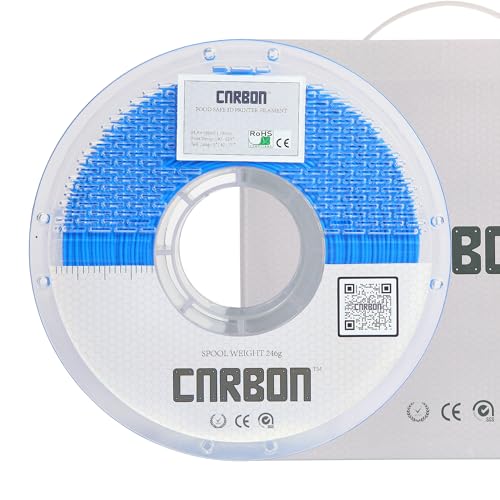
CARBON by Comfy Materials offers a certified food-grade PLA+ filament designed for safe contact with food. The filament is lab-tested and FDA-listed, meeting regulatory standards for food safety. It emphasizes a smooth extrusion with dimensional accuracy around +/- 0.02 mm, helping ensure reliable prints even with complex shapes. The product uses REVODE110 PLA+, a renewable material source with a lower environmental impact and a focus on consistent feed during high-precision projects. This filament is suitable for objects that may contact food, provided appropriate culinary safety practices are followed after printing.
Key features include: food-grade certification, lab testing and FDA compliance, and stable extrusion with tight dimensional tolerances. It’s a strong choice for prototypes of utensils, molds, or containers intended for light food contact, as long as the final parts are properly finished and cleaned before use.
YXPOLYER Food Grade PLA Filament

This 1.75 mm white PLA filament is marketed as food-grade and SGS-approved for contact with food, aligning with FDA considerations for safe kitchen applications. The filament touts enhanced toughness over standard PLA and a surface finish suitable for high-quality prints. It’s optimized for high-speed printing with a 220°C nozzle and 35°C bed, offering a practical balance between speed and surface quality. Printing at a higher temperature and a moderate bed temperature helps maintain good adhesion while preserving part integrity for food-related prototypes or utensils, though post-print cleaning and culinary-safety considerations remain essential.
FLASHFORGE Adventurer 5M 3D Printer

The Adventurer 5M 3D Printer emphasizes user-friendly operations, including one-click auto-leveling for consistent first layers and reliable bed adhesion. Its CoreXY all-metal structure supports high-speed printing up to 600 mm/s and rapid nozzle changes, making it suitable for iterative food-related prototypes where quick turnarounds are valuable. The printer’s direct extruder reaches up to 280°C, enabling a wide range of printable materials beyond standard PLA. For culinary applications, ensure proper material selection, post-processing, and compliance with any food-safety guidelines for finished parts intended for contact with food.
FLASHFORGE AD5M 3D Printer

The AD5M model offers fully automatic calibration and a robust all-metal CoreXY framework. Its 1-click leveling reduces manual setup time and improves first-layer reliability, a benefit when printing detailed prototypes for kitchen tools or food-grade accessories. The high-speed performance and ease of maintenance—such as quick-swap nozzles—support rapid iteration cycles. As with other printers intended for food-related uses, ensure material compatibility and appropriate post-processing to maintain food safety for any final product that contacts food.
Anycubic Kobra S1 Combo

The Anycubic Kobra S1 Combo is designed for multi-color outputs with built-in drying support, enabling more complex, visually appealing food-related prototypes or display items. Its core-XY structure emphasizes stable, high-speed printing, and the integrated dryer helps manage filament moisture, which is particularly beneficial when printing with filaments intended for edible-product mockups or culinary tools. While it offers rapid production and color versatility, verify the filament types used and adhere to best practices for any food-contact applications, including post-processing and cleaning protocols.
Buying Guide: Key Purchase Considerations
- Food-Safe Materials: Look for filaments explicitly labeled as food-grade and FDA-compliant. Consider third-party certifications and lab testing when you plan to expose prints to food contact surfaces.
- Printer Features: Auto bed leveling, all-metal frames, and high-temperature capabilities enable easier operation and broader material compatibility. Consider the nozzle exchange speed and maintenance routines for long-term reliability.
- Print Quality and Dimensional Accuracy: Filaments with tight dimensional tolerances reduce post-processing and improve part fit for utensils or molds. Examine tolerances like +/- 0.02 mm when available.
- Post-Processing and Finishing: Food-contact parts may require sealing, smoothing, or surface treatments to minimize porosity and ease cleaning. Evaluate post-processing steps required for safe food use.
- Safety and Cleaning: Ensure printers and tools are cleaned thoroughly and that the final product is safe for intended culinary use. Some plastics may require coatings or linings to be food-safe over time.
- Cost and Availability: Balance upfront printer costs with filament pricing and availability, especially for specialty food-grade filaments.
- Ease of Use for Beginners: If you’re new to 3D printing, look for printers with guided setups, touchscreens, and robust community support to simplify learning curves.
- Multi-Color and Material Flexibility: For presenting visually appealing food-related prototypes, consider multi-color printing capabilities and compatibility with various filaments while maintaining food-safety standards.