When professional butchers or serious home cooks debone meat, a reliable boning knife is essential. The right blade combination can improve precision, reduce waste, and speed up prep work. Below are top boning knives chosen for performance, durability, and comfort, with features tailored to meat cutting, trimming fat, and delicate bone work. This guide highlights five strong options that suit commercial and home kitchens alike.
Summary of selected products:
| Product | Brand | Blade Type | Special Feature |
|---|---|---|---|
| Mercer Culinary Ultimate White, 6 inch Curved Boning Knife | Mercer Culinary | High-carbon Japanese steel, curved blade | Ergonomic textured handle, non-slip grip |
| Victorinox Fibrox Curved Boning Knife, Flexible Blade, 6-Inch | Victorinox | Flexible stainless steel blade | Textured Fibrox handle, NSF approved |
| Mercer Culinary Millennia Colors 6-Inch Curved Boning Knife, Blue | Mercer Culinary | One-piece high-carbon Japanese steel | Blue color-coding for fish/seafood |
| Rondauno Boning Knife, 6 inch | Rondauno | High carbon stainless steel | Non-slip ABS handle, ergonomic grip |
| Winco 6″ Commercial-Grade German Steel Boning Knife | Winco | X50 Cr MoV15 German steel | Ergonomic, slip-resistant handle |
Each option below is evaluated for edge quality, control, comfort, and durability to help you choose the best fit for your operations or kitchen. Prices are not listed to keep focus on value and performance.
Mercer Culinary Ultimate White, 6 Inch Curved Boning Knife
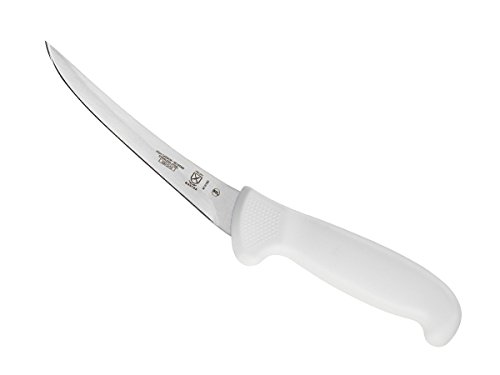
Mercer Culinary combines high-carbon Japanese steel with a curved profile suited for precise bone separation. The blade stays sharp with minimal maintenance, while the ergonomic handle provides a stable, non-slip grip during longer deboning sessions. Ideal for deboning chicken, ham, and fish, and trimming fat and sinew.
Victorinox Fibrox Curved Boning Knife, Flexible Blade, 6-Inch

The curved, flexible blade excels at delicate cuts where meat or fish bond to bone is intricate. The patented Fibrox handle is textured for a slip-resistant grip, balancing comfort and control. This knife is NSF approved, supporting professional kitchen standards for safety and hygiene.
Cutluxe Butcher Knife – 10″ Cimeter Breaking Knife

While focused on the cimeter, its full tang, razor-sharp edge enhances overall deboning precision when paired with a boner. The ergonomic pakkawood handle is triple-riveted for stability and comfort, making it a dependable option in busy kitchens that perform routine deboning and trimming tasks.
Mercer Culinary Millennia Colors 6-Inch Curved Boning Knife, Blue
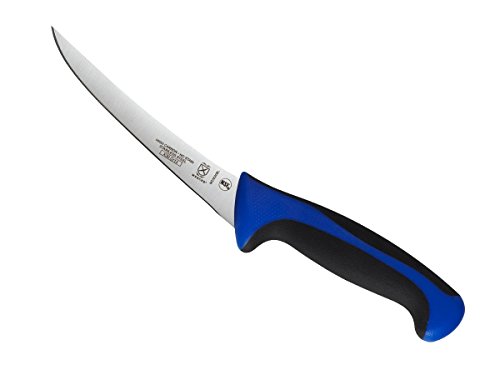
One-piece high-carbon Japanese steel offers long-lasting sharpness and easy maintenance. The blue color-coding helps prevent cross-contamination in busy kitchens handling multiple proteins. The curved blade supports efficient bone separation and trimming of chicken, ham, and fish.
Rondauno Boning Knife, 6 Inch

The ultra razor-sharp, high-carbon stainless steel blade delivers clean, precise cuts. The textured ABS handle reduces slips and offers a balanced feel for steady deboning and trimming work across different meat types, from poultry to fish.
Winco 6″ Commercial-Grade German Steel Boning Knife

The X50 Cr MoV15 German steel blade is notably sharp for removing meat from bones. An ergonomic, slip-resistant handle provides comfort during extended use, a crucial feature for commercial environments where volume and speed matter.
Buying Guide
Key purchase considerations for boning knives include blade material, flexibility, blade curvature, handle design, and hygiene features. Each factor affects control, edge retention, and ease of maintenance:
- Blade material: High-carbon stainless steel offers sharp edges and easier maintenance. German steel tends to be durable, while Japanese steel emphasizes edge retention.
- Blade flexibility: Flexible blades excel at delicate separating tasks near bones; stiffer blades provide more control for firmer cuts.
- Blade shape: Curved boning blades improve maneuverability in tight bone spaces; straight blades offer steadier lines for precise trimming.
- Handle design: Ergonomic, non-slip handles reduce fatigue during long sessions. Textured surfaces and triple-riveted builds provide durability and balance.
- Hygiene and certifications: NSF approval and color-coded handles can help meet sanitation standards in professional kitchens.
- Maintenance: Some blades are one-piece constructions with easy-edge maintenance, while others may benefit from periodic honing and professional sharpening.
- Use-case alignment: Consider the meat types you most frequently process (poultry, beef, fish) and whether color-coding or extra flexibility will improve workflow.
For professional use, pairing a curved boning knife with a flexible option can maximize efficiency. In home kitchens, a single versatile blade with good edge retention can handle most deboning tasks, supplemented by occasional specialty knives when needed.