Air poppers aren’t just for popcorn. With careful technique, hot air popcorn poppers can be repurposed to roast green coffee beans at home, offering a quick, oil-free method to reach a light to medium roast in small batches. The following top-rated models from trusted brands deliver consistent air flow, simple operation, and practical features that can support DIY coffee roasting workflows. This guide highlights five popular options and what to consider when choosing an air popper for coffee roasting.
| Product | Brand | Capacity | Notable Feature |
|---|---|---|---|
| Presto 04863 Poplite Hot Air Popcorn Popper | Presto | 18 cups | Butter cup & easy cleanup |
| Presto 04821 Orville Redenbacher’s Hot Air Popper | Presto | 1 liter | Low oil, low calories option |
| DASH Hot Air Popcorn Popper Maker | DASH | 16 cups | Butter melting tray, measuring cup |
| Presto 04869 Poplite Hot Air Popcorn Popper | Presto | 18 cups | Easy to clean, aqua/white design |
| Presto 04868 Orville Redenbacher’s Fountain Popper | Presto | 20 cups | Stainless steel/durable design |
Presto 04863 Poplite Hot Air Popper

The Presto PopLite uses hot air rather than oil, offering a low-fat option suitable for crunchy results when roasting small batches of coffee beans. It pops up to 18 cups in roughly 2.5 minutes, making it a rapid choice for hobby roasters. A built-in cap doubles as both a measuring cup and a butter-melting tray, which can help manage roasting aromas and flavor development during the process. Easy cleaning and a compact footprint support convenient at-home use.
Presto 04821 Orville Redenbacher’s Hot Air Popper

With a 1-liter capacity, this Model pops up to 18 cups quickly and without oil, which some roasters appreciate for clean setups and stable airflow. It emphasizes efficiency with minimal unpopped kernels, and its oil-free approach aligns with a low-fat roasting workflow. The product’s simple operation and easy cleaning are practical for home roasters who want repeatable results without additional cleanup steps between batches.
DASH Hot Air Popcorn Popper Maker

The DASH model offers a 16-cup capacity and includes a measuring cup that doubles as a butter-melting tray. This design supports a controlled roasting process by allowing a measured starting point for kernel quantities and later adding flavor via melted butter or other aromatics. The no-oil operation aligns with healthier roasting goals and a straightforward setup for home use.
Presto 04869 Poplite Hot Air Popcorn Popper

This aqua/white version of the PopLite line emphasizes a broad airflow with a 2.5-minute pop time for 18 cups. It shares the dual-use cap as measuring cup and butter-melting tray, helping roasters manage kernel quantities and flavor opportunities during roasting sessions. Cleaning remains straightforward, supporting rapid batch turnover.
Presto 04868 Orville Redenbacher’s Fountain Popper
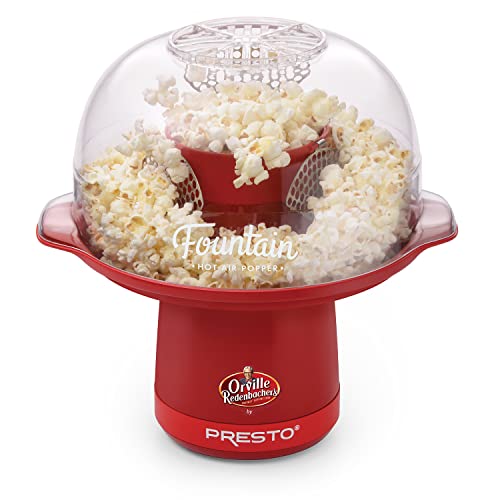
Engineered with stainless steel restrictors, this model supports popper efficiency while delivering up to 20 cups in about 3.5 minutes. Its vented cover aids in crispness, and the base nests inside the cover for compact storage. For coffee roasting, the longer roast times and steady airflow can assist in achieving even turning points across larger bean batches.
Cuisinart EasyPop Hot Air Popcorn Maker

With 1500 watts and an on/off switch, the EasyPop provides robust airflow for faster roasting sessions. A removable kernel measuring cup helps roasters manage batch sizes, and the overall build is designed for easy disassembly and cleaning between roasts. While primarily a popcorn popper, its power and straightforward operation make it a candidate for hobbyist coffee roasting experiments when used with care.
Elite Gourmet Fast Hot Air Popcorn Popper

Elite Gourmet offers up to 4 quarts of popcorn per batch with a 1300W motor. The included measuring cup doubles as a butter melting tray, enabling a simple, integrated approach to flavoring after roasting. The oil-free design is aligned with safer, cleaner experiment setups for home roasting experiments, especially when testing light to medium roast profiles.
Nostalgia Air Popper Popcorn Maker

With a 16-cup capacity, Nostalgia’s unit supports quick and easy batches of air-popped corn. Its health-conscious approach uses hot air instead of oil, aligning with a low-fat roasting setup. The included 3-ounce measuring cap helps ensure the right kernel quantity for consistent roasting outcomes, making it a practical option for entry-level home roasters exploring new methods.
Buying Guide: Air Popper Choices For Coffee Roasting
- Airflow and batch size: Larger poppers deliver more consistent heat distribution across beans, reducing the risk of scorching. Look for models that handle at least 16–20 cups for batch roasting experiments.
- Heat consistency and control: Some units prioritize quick operation, while others emphasize stable airflow. For coffee, steady agitation and even heat help produce uniform roast development.
- Ease of cleaning: Roasting can leave oils and chaff behind. Choose poppers with accessible interiors and simple disassembly for quick between-batch cleanup.
- Additional features: Integrated measuring cups and butter-melting trays can simplify flavoring and proportioning for roast testing. Footprint and storage are practical considerations for home setups.
- Safety and noise: Hot air poppers operate with moving parts and heated surfaces. Look for safety features and consider decibel levels, especially in shared living spaces.
- Compatibility with roasting goals: While designed for popcorn, many models offer adequate airflow for light to medium roast development in coffee beans. Consistent practice and careful monitoring (via a color reader or aroma cues) are key to achieving repeatable results.
When selecting an air popper for coffee roasting, align the model with your batch size, desired roast level, and cleanup tolerance. Many hobby roasters begin with a mid-range unit to test roasting profiles and gradually move to larger, more controlled equipment as confidence grows. For best results, experiment with small batches, document roast curves, and adjust heat and exposure time to reach your target flavor profiles without over-roasting.