Choosing the right compostable liners can simplify kitchen waste disposal while keeping composting eco-friendly. This guide highlights five highly-rated options that fit common kitchen sizes and meet major certifications. Each product listing covers bin compatibility, thickness, and certification status to help you compare performance and sustainability at a glance.
| Product | Bin Fit | Thickness | Count | Certifications |
|---|---|---|---|---|
| UNNI 2.6 Gal | Small Kitchen Bins | 0.71 mil | 100 | BPI, CMA, OK Compost HOME |
| UNNI 13 Gal | Tall Kitchen Cans | 0.9 mil | 50 | BPI, CMA, OK Compost HOME |
| Bag to Earth Small | Small Bins | Leak-Resistant Fiber | 30 | 100% Compostable |
| SUPERBIO 1.6 Gal | Countertop/Small Bins | 0.63 mil | 50 | BPI, OK Compost INDUSTRIAL |
| JENCENBIO Paper Bags | Small Kitchen Trash Cans | PLA Liner | 30 | BPI ASTM D6400 |
The following sections offer a concise look at each option. All products are designed to minimize leaks, odors, and bin mess while supporting responsible waste diversion.
UNNI 2.6 Gal Compostable Trash Bags

Designed for small kitchen bins, these 2.6 gallon liners measure 16.3 by 16.5 inches and are 0.71 mil thick. Each roll contains 100 bags, making daily waste collection quick and tidy. The liners are marketed as “everyday strength,” suitable for typical peels and scraps without tearing. Certifications include BPI, CMA, and OK compost HOME, confirming compostability to ASTM D6400 standards in both home and industrial contexts.
UNNI 13 Gal Compostable Trash Bags

These 13-gallon liners are built for tall kitchen cans, measuring 23.75 by 31.49 inches with a thickness of 0.9 mil. They come 50 bags per roll and provide reinforced strength to handle daily peels and scraps. Like the smaller variant, they are independently certified by BPI, CMA, and OK compost HOME, ensuring compatibility with household and facility composting processes under ASTM D6400 guidelines.
Bag to Earth Kitchen Food Waste Bag

This option emphasizes a leak-resistant natural fiber lining and is fully compostable. The liner is made from renewable resources and is marketed as 100% compostable, making it a straightforward choice for households seeking a paper-based, biodegradable alternative for kitchen waste. The bags are sized for small to medium bins and designed to minimize odors and spills during collection and disposal.
SUPERBIO 1.6 Gal Compostable Bags

Perfect for small countertop bins, these 6 L bags are 0.63 mil thick and come 50 bags per roll with a handle tie. They are certified by BPI for commercial compostability and OK compost INDUSTRIAL, with additional TÜV-SEEDLING recognition. The packaging notes a shelf life of about one year and guidance to dispose of bags within a few days when filled with waste that can be acidic or alkaline, which is important for maintaining bag integrity in varied kitchen conditions.
JENCENBIO Compostable Paper Bags

This option uses compostable paper bags with a compostable PLA liner, offering a leak-resistant solution for small kitchen waste. Each bundle contains 30 bags. Certifications include BPI and ASTM D6400 compliance, making them suitable for households that want a paper-based liner without sacrificing bag integrity. The bags are sized for compact bins and can double as a versatile storage option for produce prior to composting.
BioBag The Original Compostable Bag
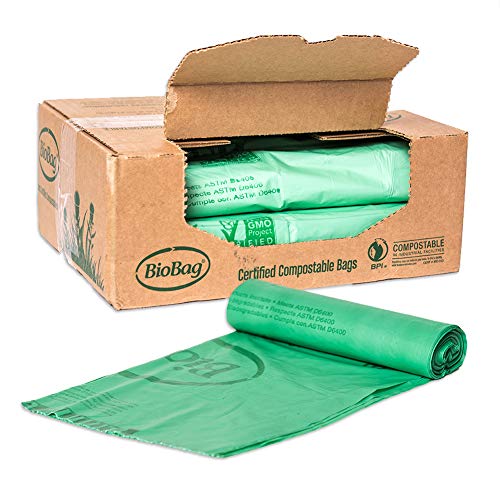
BioBag offers 48-gallon liners in a bulk-style package. These 42 by 48 inch liners are thicker at 0.80 mil and are certified compostable by the Biodegradable Products Institute to meet ASTM D6400. They are designed for heavy-duty organics collection and can be used in larger bin setups or community composting streams, ensuring reliable performance for larger volumes of food waste.
Buying Guide: Key Factors For Choosing Compostable Liners
- Bin compatibility: Match bag size and thickness to your bin’s volume and opening to prevent tearing and leakage.
- Material and thickness: Thicker liners (0.9 mil or higher) tend to be more durable for daily scraps, while thinner options may suffice for lighter use or paper-based liners.
- Certifications: Look for BPI, OK compost HOME, OK compost INDUSTRIAL, and ASTM D6400 compliance to ensure true compostability in the intended setting.
- Leaktightness and odor control: Evaluate liner design for leak resistance and odor containment, especially in warm kitchens or high-moisture waste streams.
- Shelf life and storage: Some brands note shelf life or storage guidance; store away from heat to preserve liner integrity.
- Environmental footprint: Consider whether the liner uses renewable materials, is fully compostable, and aligns with your local composting facilities’ capabilities.
- Cost and availability: If you compost frequently, prioritize packs with higher bag counts or easier access to refills to reduce maintenance time.
Additional Considerations and Perspectives
Consumers vary in their composting setup. Those with home composters may prefer home-friendly certifications like OK compost HOME, while households connected to municipal programs may prioritize ASTM D6400 compliance for industrial facilities. Paper-based or natural-fiber liners can reduce plastic usage, yet may require careful handling to prevent leaks. For bins that collect both kitchen scraps and small amounts of moisture-heavy waste, reinforced or thicker liners can prevent tearing during daily use. Finally, consider storage space and whether your cabinet setup accommodates roll packs or larger multi-pack consumables. Each option here offers a balance of reliability, sustainability, and ease of use for different kitchen environments.