People with vision impairment, tremors, or limited dexterity often rely on specialized eating utensils and adaptive plates to maintain independence at mealtimes. This guide reviews five top options designed to reduce spills, improve grip, and stabilize movement. Each entry includes a quick overview, key features, and practical considerations to help you compare products for safer, more confident eating experiences.
Summary of Selected Products
| Product | Brand | Key Benefit | Link |
|---|---|---|---|
| Anti-Spill Scoop Plate With Lip Edge (White) | Jayour | Non-slip base and raised edges to reduce spills | View |
| Adaptive Utensils, Weighted Set | GREENANTS | 180° adjustable angles; weighted grip for tremors | View |
| 45° Angled Built Up Handle Utensils | SINHJX | Ergonomic 45° design reduces wrist strain | View |
| 6 Pcs Spill Proof Scoop Plate | Hushee | High-low edge with suction base for stability | View |
| Mars Wellness Weighted Utensils Set | MARS WELLNESS | Heavy-duty, enhanced stability for tremors | View |
Jayour Anti-Spill Scoop Plate With Lip Edge
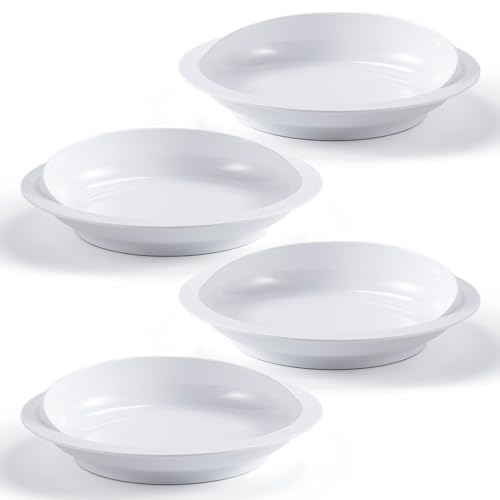
Jayour’s spill-proof plate is designed to support independent eating for individuals with tremors or Parkinson’s-related challenges. The raised edges help contain food, while the non-skid padded bottom minimizes plate movement. This combination can reduce mess and support a steadier mealtime routine, especially for users who rely on visual cues to guide their hand movements. The plate is suitable for use with standardized utensils, enabling a familiar dining experience with added spill control.
Key features include a non-slip base that anchors the plate, raised lip edges to capture and redirect food, and a design oriented toward simplifying cleanup. Users may benefit from pairing the plate with weighted or angled utensils to further stabilize eating actions and minimize spillage during meals. Consider this plate if spill prevention and stability are top priorities in a visually impaired setting.
Adaptive Utensils, Weighted Set by GREENANTS

This weighted utensil set is designed to assist individuals with weak grip and tremors. A key feature is the 180° adjustable angles, enabling a more natural hand position for users with limited dexterity. The included fork and spoon (and sometimes a cleaning brush) support a broader range of meals, from soups to solids. Occupational therapists often recommend angled, weighted utensils to improve control and reduce fatigue during longer meals.
Considerations include the overall length (about 9.25 inches) and the ability to rotate or adjust angles to suit personal comfort. The weight in the handles helps dampen tremors, potentially improving accuracy while guiding food to the mouth. The set is particularly helpful for users who travel or need portable solutions without sacrificing stability at mealtime.
45° Angled Built Up Handle Utensils

SINHJX offers built-up, ergonomic utensils with a 45-degree angle to minimize wrist rotation and fatigue. The angled design supports independent eating for individuals who may experience stiffness or tremors. The utensils are described as lightweight yet stable, featuring non-slip handles with textured surfaces to enhance grip. This combination addresses common challenges faced by seniors and people with Parkinson’s disease or arthritis during meals.
Practical considerations include the balance between weight and control. If a user benefits from a more pronounced angle to reduce wrist effort, these utensils may prove advantageous. The set’s right-handed orientation fits common dining habits, though extensions to left-handed configurations may be sought if needed. For those prioritizing ease of use and a straightforward eating experience, this option provides a robust balance of design and usability.
6 Pcs Spill Proof Scoop Plate By Hushee

Hushee’s multi-plate set emphasizes spill-proof design with suction bases to stabilize plates during meals. The high-low edge configuration helps contain food and simplify one-handed eating, a feature often valued by individuals who navigate tremors, stroke recovery, or dementia-related challenges. The materials are described as sturdy and dishwasher-safe, enabling easy cleaning after meals or snack times.
Key considerations include the applicability of the suction base on different table textures and the ease of removing the plate for reheating or washing. Users seeking a comprehensive plate solution may appreciate the larger set that supports multiple mealtime configurations. This option aligns with a practical approach to reducing spills and encouraging consistent self-feeding routines.
Mars Wellness Weighted Utensils Set

The Mars Wellness weighted utensils are built for maximum stability during meals. The set includes a fork, knife, and spoon, all designed with heavier handles to counteract tremor-induced movement. The rubber grip provides a secure, comfortable hold even for users with arthritis or limited hand strength. These utensils are described as durable and suitable for daily use, offering a practical solution for those who require steadier control without sacrificing standard dining familiarity.
Guidance for buyers includes evaluating the weight distribution, grip width, and whether the heavier handles meet individual comfort levels. While weight helps reduce tremors, excessive heft can be tiring for some users. This option is well-suited for those who prioritize a balance of durability, stability, and a classic silverware feel.
Buying Guide: Key Considerations For Choosing Eating Utensils For The Blind And Tremor Sufferers
- Grip and comfort: Look for built-up handles, non-slip materials, and ergonomically shaped grips to support a secure hold for limited dexterity or arthritis.
- Weight and balance: Weighted utensils can dampen tremors, but weight should not cause wrist fatigue. Test different weights and handle shapes to match the user’s strength and endurance.
- Angle and orientation: Angled utensils (45° or adjustable angles) reduce wrist strain and improve alignment with the mouth, which is especially helpful for users with rigid wrist movements.
- Plate stability: Non-slip plates and suction bases prevent spills, while raised edges help guide food back toward the mouth. Consider combining a stable plate with weighted utensils for best results.
- Durability and care: Choose materials that are dishwasher-safe and resistant to chipping or staining. Stainless steel builds with reinforced grips tend to endure daily use more reliably.
- Eating independence goals: If the user is navigating Parkinson’s, stroke recovery, or dementia, prioritize tools that minimize spill risk and maximize independent feeding without constant assistance.
- Right- vs left-handed suitability: Some utensils are designed for a specific dominant hand. If the user is left-handed, seek reversible or left-handed friendly designs when possible.
- Portability and storage: For caregivers, compact, easy-to-clean sets offer practicality for home and travel use without sacrificing functionality.
- Maintenance: Ensure compatibility with common cleaning methods (dishwasher, microwave) and verify whether parts may require replacement over time.
How To Choose The Right Combination
Most users benefit from a combination approach: a stable plate to reduce spills and a set of weighted, angled utensils to manage tremors efficiently. When available, pairing a 45° angled utensil with a spill-proof plate can create a cohesive system that supports easier self-feeding with less mess. Consider testing a few options to identify which pairing yields the most comfortable and confident eating experience for the individual.
All products reviewed here are designed to address common barriers faced by blind users and those with tremors or limited hand mobility. Objective evaluation should weigh grip comfort, stability, ease of cleaning, and how each item aligns with the user’s daily routines and care needs.