For precise peeling, trimming, and delicate fruit prep, a sharp Japanese paring knife is a staple in any kitchen. This guide highlights five top picks, comparing steel, handle design, and overall ergonomics to help you choose a knife that fits your cooking style and routine. Each option here emphasizes edge retention, balance, and control—crucial factors for professional chefs and home cooks alike.
| Product | Brand | Key Benefit |
|---|---|---|
| KYOKU Paring Knife | KYOKU | |
| HOSHANHO Paring Knife | HOSHANHO | |
| imarku Paring Knife | imarku | |
| Shun Sora Paring Knife | Shun | |
| KEEMAKE Paring Knife | KEEMAKE |
KYOKU Paring Knife – Shogun Series

The KYOKU Shogun Paring Knife blends traditional craftsmanship with modern technology. Its 3.5″ VG-10 Damascus blade comprises 67 layers, cryogenically treated for enhanced edge retention and corrosion resistance. A balanced fiberglass handle with a mosaic pin supports precise control, while the 8–12 degree Honbazuke edge delivers exceptionally sharp performance for peeling, mincing herbs, and fruit coring. The included sheath and case help protect the blade when stored or transported, making it suitable for both home kitchens and professional use.
HOSHANHO 3.75 Inch Paring Knife
The HOSHANHO paring knife uses imported Japanese 10Cr15CoMoV stainless steel, achieving up to 60 HRC through precision quenching and vacuum nitriding treatment. The blade length (3.75″) is optimized for fruit work, with a hand-sharpened 15-degree edge for high precision. An ergonomic pakkawood handle provides a comfortable, secure grip, designed to minimize wrist strain during delicate tasks like peeling and trimming.
imarku Paring Knife – 3.5 Inch

The imarku 3.5″ paring knife features a high-carbon Japanese steel blade with 58 HRC hardness for sharp, durable performance. A 9°–15° per-side razor edge and taper-ground geometry promote stability and long-lasting sharpness for peeling, trimming, and precision cuts. The ergonomic pakkawood handle ensures a comfortable grip, making the knife suitable for daily fruit prep and intricate kitchen tasks without fatigue.
Shun Sora 3 1/2″ Paring Knife
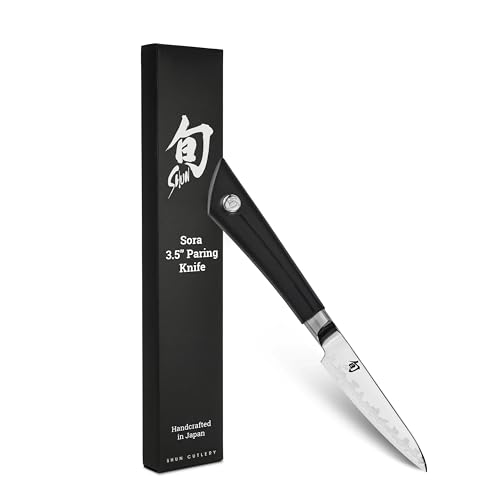
The Shun Sora paring knife combines traditional Japanese aesthetics with modern blade technology. The 3.5″ blade features a San Mai core with VG10 steel, supported by 420J stainless steel for added durability. The patented composite blade and a 16-degree edge deliver precise peeling, coring, and decorative work. A hammered finish adds style while maintaining a sharp, dependable edge for delicate fruit and vegetable prep.
Japanese Paring Knife 4-Inch
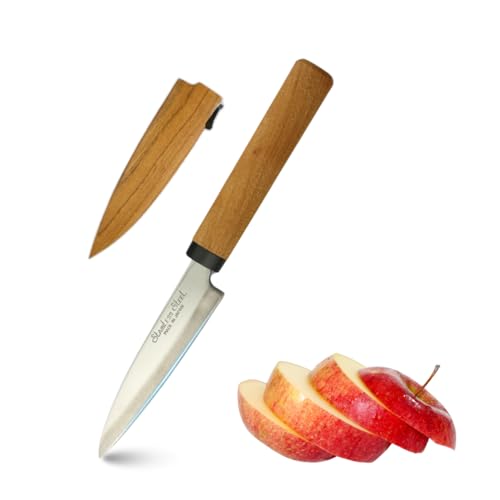
This 4-inch Japanese paring knife from JapanBargain offers a traditional approach with a high-carbon stainless steel blade and a wooden handle. The blade length suits peeling, trimming, and precision cutting tasks, while the wooden handle provides a natural, secure grip. Made in Japan, it emphasizes traditional craftsmanship paired with modern durability for everyday fruit and vegetable prep.
Buying Guide: Key Purchase Considerations
- Blade material and hardness: Higher hardness (60+ HRC) typically yields longer edge retention but can be more challenging to sharpen. Consider your comfort level with maintenance and sharpening tools.
- Blade geometry and edge angle: Paring knives often use 15–16 degrees per side for sharpness. Some models use single- or double-beveled edges; choose based on cutting style and accuracy needs.
- Steel type: VG10, 440C, and 9CR18MOV are common choices. Damascus or layered blades can reduce sticking and add aesthetic appeal while maintaining performance.
- Handle design: Ergonomic pakkawood, rosewood, or fiberglass handles affect balance and grip. Ensure the handle length and weight suit your hand size and cutting tasks.
- Balance and weight: A well-balanced knife reduces wrist fatigue during detailed tasks like peeling and trimming small produce.
- Maintenance: Consider whether a blade is stain-resistant, easy to sharpen, and whether the knife requires hand washing or specific care to maintain finish.
- Included accessories: Some knives come with sheaths or cases for storage, which aids in protection and transport.
- Price-to-performance: While premium steels offer exceptional performance, evaluate whether the features meet your cooking needs and budget.