Creating a kid-friendly kitchen helps little helpers participate in daily chores while staying safe. This guide highlights high-quality, stability-focused kitchen step stools and learning towers designed for toddlers aged 18 months to 3 years. Each option emphasizes anti-tip design, secure rails, and materials suitable for busy family kitchens. The selections below cover wood and metal builds with adjustable heights, built-in safety features, and convenient folds or storage to fit small spaces.
| Product | Brand | Key Feature | Height Range | Materials |
|---|---|---|---|---|
| COSYLAND Kids Kitchen Step Stool | COSYLAND | CPC Certification, removable anti-drop rail | 18 months – 3 years | Natural bamboo |
| HBTower Kids Step Stool 2 Steps | HBTower | Anti-tip A-frame, non-slip feet | Toddlers 2+ years | Aluminum alloy |
| Woodure 4-in-1 Toddler Kitchen Step Stool | Woodure | Foldable; chalkboard and whiteboard surfaces | 1-3 years | Wood |
| COSYLAND Adjustable Height Tower | COSYLAND | Three height levels; wide anti-drop board | 3 levels | Wood |
| Mangohood Kids Kitchen Step Stool | Mangohood | Anti-tip design; anti-drop safety bar | 2+ years | Wood/Plastic blend |
COSYLAND Kids Kitchen Step Stool

- Unique patented design with CPC certification confirms compliance for children’s products.
- Removable anti-drop railing provides optional extra security.
- A-shaped frame enhances stability and reduces tipping risk.
- Four-sided rails plus non-slip feet support safe climbs and steady standing.
- Solid natural material finish resists scratches and damage; supports up to 150 lbs.
HBTower Kids Step Stool 2 Steps
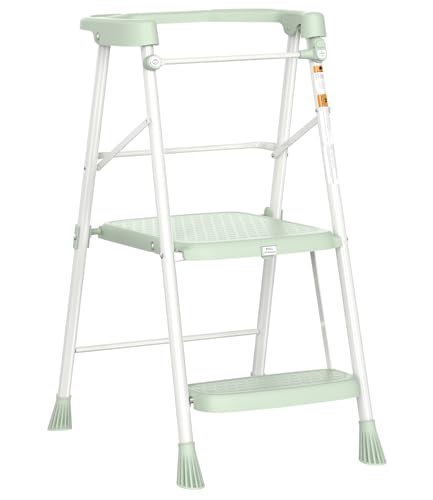
- Environmentally friendly, safe materials paired with a lightweight aluminum alloy frame.
- A-frame structure provides stability; includes non-slip feet on all legs.
- Non-slip bumps on the countertop surface and four supporting rails for all-around protection.
- No assembly required—simply open, press the pedal to lock, and fold by lifting the pedal.
- Designed for ongoing growth with a simple setup that suits many kitchens.
Woodure 4-in-1 Toddler Kitchen Step Stool
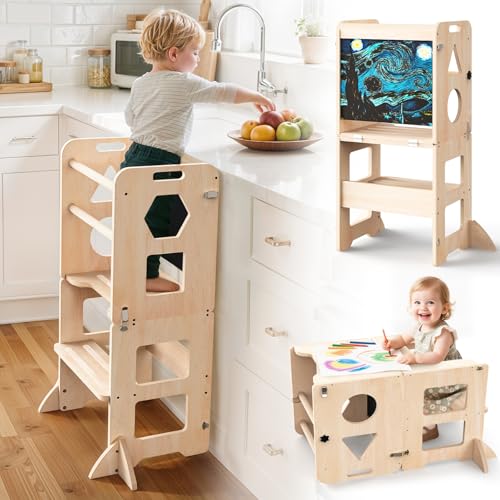
- Rugged A-frame design minimizes tipping; edges are rounded and sanded for safety.
- Includes a removable safety bar for added stability and security during use.
- Built-in blackboard encourages creativity and learning during kitchen activities.
- Transforms into a toddler table and chair set with a quick clip mechanism for versatility.
- Suitable for 1-3 year olds with durable wood construction.
COSYLAND Adjustable Height Standing Tower

- Three-height levels accommodate growing toddlers and adapt to different kitchen counters.
- Heavy base and reinforced feet improve overall stability for climbing, standing, or light jumping.
- Wide anti-drop board encloses the child on all sides to reduce slipping and falling.
- Designed for hands-free engagement so parents can perform tasks while supervising from a distance.
- Hefty construction emphasizes durability in busy family homes.
Mangohood Kids Kitchen Step Stool

- Anti-tip design with a sturdier anti-tip support foot for maximum stability.
- Anti-drop safety bar helps keep children securely in place during kitchen tasks.
- Promotes bonding moments in the kitchen while teaching practical life skills.
- Designed for easy climbing and safe descending, supporting independent exploration.
- Suitable for toddlers who want to be involved in cooking and cleaning routines.
Buying Guide: Key Purchase Considerations
When choosing a kitchen step stool or learning tower for a toddler, prioritize safety, adjustability, and longevity. Consider the following factors to help you compare options and select the best fit for your home:
- Safety certifications and design: Look for CPC certification or explicit safety features like anti-tip frames, multiple rails, and stable base designs. Non-slip feet and traction surfaces reduce the risk of slips on slick kitchen floors.
- Weight capacity and age range: Ensure the product can support more than your child’s current weight and that the height settings accommodate growth from toddler to preschooler.
- Stability vs. versatility: Some stools emphasize raw stability with a simple platform, while others offer foldability, storage, or transform into a table or chair set. Choose based on space and intended use.
- Materials and maintenance: Wood offers sturdiness and a classic look, while aluminum or composite designs can be lighter and easier to clean. Check for finishes that resist scratches and are kid-safe.
- Adjustability and ease of use: Height adjustment should be straightforward, with secure locking mechanisms. Some models require assembly; others are ready to use out of the box.
- Storage and space needs: In smaller kitchens, foldable designs or compact footprints help maintain a tidy counter area when not in use.
- Learning features: Built-in chalkboards or whiteboards add educational value, allowing kids to practice writing or doodling while engaging in kitchen tasks.
Depth of coverage matters for safety-minded households. Models with removable safety rails or multi-rail configurations offer flexible supervision options as children grow. Some towers include included accessories (chalkboards, whiteboards, or table attachments) that can extend their usefulness beyond simple stepping or standing tasks.
In evaluating options, balance price with safety features and growth potential. A single, well-built stool that adapts through several developmental stages can provide greater long-term value than multiple shorter-lived products.