Choosing the right knife for cutting vegetables can transform prep time from a chore into a precise, efficient task. This guide highlights top blades optimized for vegetables, including nakiri and santoku styles, so you can slice, dice, and mince with comfort and control. Each pick balances sharpness, durability, and ergonomics to help you tackle onions, peppers, leafy greens, and crunchy roots with confidence.
Summary of selected products:
| Product | Brand | Blade Type | Key Benefit |
|---|---|---|---|
| PAUDIN Nakiri Knife — 7″ | PAUDIN | Nakiri | Ultra-sharp edge; ergonomic pakkawood handle |
| HOSHANHO 7″ Nakiri Knife | HOSHANHO | Nakiri | 60HRC high carbon steel; balanced grip |
| imarku Chef Knife 7″ Santoku | imarku | Santoku | Ultra sharp, hollow edge to reduce sticking |
| DDF iohEF Kitchen Knife | DDF iohEF | Chef’s/Santoku | Professional Japanese stainless steel; ergonomic handle |
| Matsato Chef Knife — 6.3″ | Matsato | Chef/Santoku | Well-balanced; comfortable oak handle |
PAUDIN Nakiri Knife — 7″

The PAUDIN Nakiri Knife offers a classic 7-inch blade designed for vegetable-focused prep. Its all-purpose profile supports slicing, dicing, chopping, and mincing, making it a versatile addition to home kitchens. The blade uses 5Cr15Mov stainless steel rated around 56+ hardness, delivering a razor-sharp edge that stays durable with routine use. The ergonomic pakkawood handle balances the thin blade for precise control, reducing fatigue during extended chopping sessions.
HOSHANHO 7 Inch Nakiri Knife

The HOSHANHO 7-inch Nakiri is engineered for vegetable prep with a high carbon stainless steel core (10Cr15CoMoV) and a polished 60HRC hardness after heat treatment. The blade’s edge is honed to a sharp 15-degree angle per side, delivering clean, precise cuts through vegetables. An ergonomic pakkawood handle complements the blade for balanced handling, minimizing fatigue during repetitive chopping tasks.
Astercook Knife Set — 13 Pieces

This 13-piece set provides a broad range of blades for vegetable prep, including knives sized for chopping, slicing, and dicing. The set features an anti-rust coating and dishwasher-safe design, along with blade guards for safe storage. Its multiple blades help streamline vegetable prep without swapping tools mid-task, though care with edge maintenance is advised to preserve long-term sharpness.
imarku Chef Knife 7 Inch — Santoku

The imarku 7-inch Santoku features a high-carbon stainless steel blade sharpened at a precise edge angle and a hollow edge design to reduce sticking. The knife’s light, balanced feel and ergonomic pakkawood handle support comfortable, controlled slicing and dicing of vegetables, fruits, and proteins alike.
imarku Japanese Chef Knife — 8 Inch
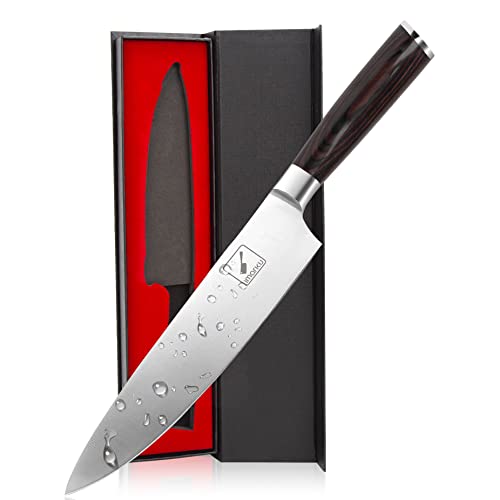
This 8-inch chef knife from imarku uses HC stainless steel with carbon and chromium for durability. It’s designed for multipurpose kitchen use, including vegetable prep, and carries a Rockwell hardness rating in the 56-58 range. The Pakka handle and FSC-certified wood frame offer a sturdy grip and a balanced cut through a variety of veggies.
DDF iohEF Kitchen Knife — 7 Inch

The DDF iohEF chef’s knife emphasizes a premium Japanese stainless steel composition with a 5Cr15Mov base and a sharp 15-degree per-side edge. Its well-balanced construction and ergonomic handle provide comfortable control for extended vegetable prep sessions, supporting slicing through tougher produce as needed.
HENCKELS Forged Accent Paring Set

HENCKELS paring knives emphasize long-lasting sharpness and German-engineered durability. While primarily used for delicate vegetable prep and trimming, the set’s forged bolster construction improves balance and control from blade to handle, helping with fine, precise cuts on small vegetables.
Matsato Chef Knife — 6.3″

The Matsato 6.3-inch chef knife emphasizes a well-balanced design, with a solid oak handle and a Japanese steel blade. It’s positioned for precise vegetable prep, offering comfortable handling for users seeking a compact blade without sacrificing control or versatility in chopping and mincing tasks.
Buying Guide: Key Purchase Considerations And Comparisons
- Blade style: For vegetables, Nakiri knives excel at straight, thin slices with flat blades, while Santoku blades offer versatility for chopping and mincing. If you mostly prep leafy greens and root vegetables, a Nakiri is often preferred; for a multi-purpose tool, a Santoku can be more convenient.
- Blade material and hardness: Higher carbon content and stainless steel blends improve edge retention and rust resistance. Look for blades around 56-60 HRC for a good balance of sharpness and durability, with proper maintenance to prevent corrosion.
- Edge geometry: A sharper, thinner edge (15-18 degrees per side) yields cleaner cuts in vegetables. A hollow edge can reduce sticking when slicing sticky produce like cucumbers or mushrooms.
- Handle design: Ergonomic, well-balanced handles reduce fatigue during long prep sessions. Pakkawood and FSC-certified woods offer a premium grip, while plastic handles provide easy maintenance and durability.
- Maintenance: Some blades are dishwasher-safe, while others should be hand-washed to preserve the edge and prevent corrosion. Regular stropping or a stone edge refinement can maintain sharpness over time.
- Size and weight: For beginners, a lighter knife improves control; professionals may prefer a balanced mid-weight blade for precision and speed in vegetable prep.
- Budget and value: A broader knife set can provide variety, but investing in a single high-quality vegetable knife can pay off in durability and performance. Consider warranty coverage and replacement parts when evaluating price.
- Maintenance routine: Regular honing and periodic sharpening are essential. Use a sharpening stone or guided sharpener suited to the blade’s material and angle to keep a consistent edge.
- Use cases: For home kitchens, a Nakiri or Santoku that handles both vegetables and light proteins is versatile. For users who repeatedly prep large quantities of vegetables, a dedicated Nakiri is often most efficient.