The following selections focus on reliability, versatility, and user-friendly design for home bakers and hobbyists. Whether you prefer hand tools to knead with feel or dedicated dough makers with fermentation functions, these picks help you achieve consistent texture and flavor in bread, pizza dough, and sourdough starters. Below is a quick overview of five top-rated options and how they fit common bread-making needs.
| Product | Brand | Notable Strength | Best For |
|---|---|---|---|
| TEEVEA Danish Dough Whisk Stainless Steel | TEEVEA | Four-ring flow design for efficient mixing | Quick, even mixing without a mixer |
| VONCI Electric Dough Maker with Ferment Function | VONCI | 7.3-quart capacity with proofing timer | Large batches and automated kneading/fermentation |
| ALLTOP Danish Dough Whisk | ALLTOP | Three-loop design for high-moisture dough | Gentle, thorough kneading by hand |
| CEBORY 3-IN-1 Electric Stand Mixer | CEBORY | 10-speed DC motor with multiple attachments | All-in-one mixing, beating, and kneading |
| Joydeem Electric Dough Maker with Ferment Function | JOYDEEM | Fermentation with controlled intervals | Dough fermentation and automatic kneading |
TEEVEA Danish Dough Whisk Stainless Steel
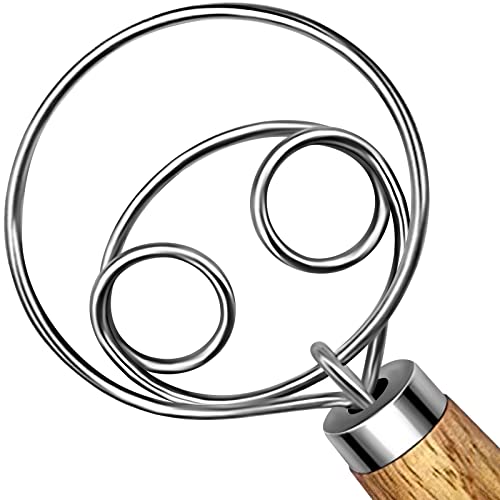
The upgraded Danish whisk from TEEVEA features a four-ring flow design to boost mixing efficiency. This hand tool accelerates the blending of ingredients for sourdough and other doughs without relying on a bulky electric mixer. The ergonomic wooden handle provides a comfortable, non-slip grip even with wet hands, helping reduce fatigue during long kneading sessions. Constructed with a 304 stainless steel coil, the whisk resists corrosion and rust, making it suitable for repeated use with dough, cream, and eggs. Its design helps keep dough cohesive without overworking it.
Best used for: quick mixing tasks, combining flour and water, and handling wet doughs where a traditional spoon or spoon-like whisk may struggle. While not a substitute for stand mixers in heavy-duty kneading, it excels at incorporating ingredients evenly and efficiently, especially in starter builds or dough refreshers. The tool is easy to clean and store, and its durable build is designed to last with regular kitchen use.
VONCI Electric Dough Maker With Ferment Function

The VONCI dough maker combines kneading and fermentation in a single compact unit. With a 7.3-quart (7L) stainless steel bowl, it can handle large batches, making it suitable for family baking or small gatherings. A 200W motor powers a spiral kneading structure to simulate manual kneading, while a built-in fermentation function supports controlled resting times. The device offers preset kneading and proofing durations, with a straightforward one-button operation that saves time and effort. A transparent lid and suction feet help with monitoring and stability during operation.
Considerations: This model is ideal for those who want to minimize hands-on time and who regularly bake bread, pizzas, or dumplings in moderate to large portions. It may be less suited for ultra-tiny batches or delicate pastry work that requires more nuanced, slower mixing speeds. Cleaning is simplified by a stainless steel bowl, though attachment compatibility should be verified if you rely on a wide range of tools.
ALLTOP Danish Dough Whisk

The ALLTOP Danish Dough Whisk brings a premium, food-grade 430 stainless steel design with rust resistance and BPA-free construction. Its three-loop configuration is engineered to cut through high-moisture doughs, such as sourdough, and blend ingredients evenly without overmixing. The whisk is praised for allowing quick dough preparation and for staying sturdy through regular use. The ergonomic handle design supports comfortable use with both dry and sticky doughs, making it a staple for bakers who favor hands-on kneading without bulky gadgets.
Usage guidance: Use this whisk for initial dough hydration, mixing in salt, yeast, and liquids, and for scraping down bowl rims between folds. While it excels in gentle but thorough mixing, it is not a substitute for a stand mixer when handling very large batches or very stiff doughs. It pairs well with a manual kneading workflow, providing faster, cleaner results than a spoon alone.
CEBORY 3-IN-1 Electric Stand Mixer

The CEBORY 3-IN-1 electric stand mixer offers a versatile solution with 10 speed settings plus a pulse function. It includes a dough hook, beater, and whisk, enabling users to handle batter, dough, and whip tasks in one appliance. A DC motor provides robust power for kneading, making it suitable for doughs like bread, cookies, and pastries. The tilt-head design makes attachment changes and cleaning straightforward. The unit is designed for easy disassembly and dishwasher-friendly components, contributing to convenient maintenance.
Considerations: This mixer suits everyday home use and those who want a compact, all-in-one device. While powerful, heavier doughs may still benefit from a larger, dedicated mixer. For best results, monitor dough consistency and avoid overloading the mixer with extremely stiff batches. The included attachments expand functionality, but compatibility with third-party tools should be checked if you rely on specialized equipment.
JOYDEEM Electric Dough Maker With Ferment Function

The Joydeem dough maker combines kneading with fermentation in a compact 5-quart bowl. Its 200W motor mimics the action of hand-kneading in intervals, making it effective for bread, pizza, sourdough, roti, dumplings, and steamed buns. A fermentation mode maintains a stable temperature in the 77–100°F range, aiding dough development in various recipes. The unit is designed to save time and effort while producing consistent dough textures, with recommendations for water-to-flour ratios and batch sizing to optimize results.
Use-case guidance: This model works well for bakers who want a dedicated fermentation-capable appliance without the bulk of a full-size stand mixer. It’s particularly helpful for sourdough and other doughs that benefit from controlled fermentation. For best outcomes, follow the user manual’s guidance on fermentation temperatures and batch weights, and consider supplementing with a traditional kneading method for very stiff doughs.
Buying Guide: Key Purchase Considerations And Comparisons
- Purpose and workflow: Decide whether you prefer hand tools for tactile control or an electric mixer/dough maker for hands-off kneading and fermentation. For frequent, large-batch baking, a standalone dough maker with fermentation can save time and effort.
- Capacity: Larger bowls (7 qt / 7 L or more) suit family baking and bulk doughs; smaller models work well for individual loaves and quick tasks. Consider storage space and bowl material (stainless steel is durable and dishwasher-safe).
- Power and speed: Look for multiple speeds and a sturdy motor. For sourdough and heavy doughs, robust kneading action is essential. A quiet motor with good torque adds value in a home kitchen.
- Attachments and versatility: Confirm compatibility with dough hooks, beaters, and whisks. Some units include ferment features or multiple attachments, which can justify the investment for bakers who tackle a range of recipes.
- Maintenance and cleaning: Removable bowls and dishwasher-safe components simplify cleaning. Tilt-head designs can ease attachment changes and reduce cleanup time.
- Price vs. value: While higher-priced models may offer more features, evaluate which capabilities align with your baking goals. A well-chosen Danish dough whisk can complement a mixer or stand-alone dough maker for efficient dough preparation.
- Durability and materials: Stainless steel coils and BPA-free components contribute to longevity and food safety. Wooden handles offer a comfortable grip, while rust-resistant parts extend tool life in wet environments like dough making.
In summary, choose based on your typical batch size, preferred method (manual vs. electric), and desired fermentation capabilities. For frequent bread making, a combination of a reliable Danish dough whisk for quick mixing and a dough-maker with fermentation can deliver consistent results with less effort. For occasional baking, a versatile stand mixer with multiple attachments may cover most tasks effectively without needing a separate fermentation appliance.