Choosing natural sponges for dishwashing helps reduce plastic waste and minimizes chemical exposure in the kitchen. This guide reviews five top options that balance effective cleaning with environmental responsibility. Each option uses plant-based materials and promotes long-lasting performance, helping you swap out plastic sponges for good. The featured products vary in fiber composition, scrubbing power, and durability to fit different cleaning preferences.
Summary of chosen products:
– AIRNEX Biodegradable Natural Kitchen Sponge (12 Pack) – Biodegradable cellulose with coconut fiber scrubbers; ergonomic S-shape for easy grip.
– Isshah Plant-Based Kitchen Sponges – FSC Certified and PETA Approved; cellulose and sisal hemp fibers; durable and effective.
– KICKLEEN 9 Pack Biodegradable Natural Kitchen Sponge – White cellulose and coconut fiber; 2-layer design; ergonomic S-shape.
– Natural Loofah Dish Sponge (Pack 30) – 100% biodegradable loofah-style sponge; multi-layer construction for longevity.
– AIDEA Sponges Non Scratch (24 Count) – Cellulose and sisal fiber; non-scratch surface protection for delicate cookware.
AIRNEX Biodegradable Natural Kitchen Sponge

AIRNEX offers a plant-based dish sponge made from white cellulose with coconut fiber scrubbers. The sponge is designed to be biodegradable and compostable, reducing plastic waste in the kitchen. Its porous structure helps it dry quickly, lowering the chance for lingering odors or mold. An ergonomic S-shaped design makes gripping easier during longer scrubbing sessions, aiming to reduce hand fatigue while cleaning dishes.
Isshah Plant-Based Kitchen Sponges

Isshah provides FSC-certified, PETA-approved dish sponges featuring wood cellulose on the main side and sisal hemp fibers on the reverse. This combination offers sustainable materials with strong cleaning power that resists scratching delicate surfaces. The design emphasizes durability, enabling repeated use without tearing, and aligns with eco-friendly kitchen goals by prioritizing renewable fibers and responsible sourcing.
KICKLEEN 9 Pack Biodegradable Natural Kitchen Sponge

KICKLEEN combines white cellulose with coconut fiber in a two-layer, plant-based sponge. The reinforced, porous cellulose layer delivers strong absorption for dishes, while the coconut fiber scrubber handles grime without scratching surfaces. The ergonomic S-shaped form supports comfortable handling and minimizes hand strain during scrubbing, making it a practical option for regular dishwashing routines that prioritize sustainability.
Natural Loofah Dish Sponge (Pack 30) – Miw Piw

This dish sponge uses a natural loofah (luffa) construction, marketed as 100% biodegradable and compostable. The multi-layer design provides durable scrubbing capacity while remaining eco-friendly. It is designed to handle various cleaning tasks, including nonstick cookware and glassware, with a focus on zero-waste living. The loofah’s natural fibers offer gentle yet effective abrasion for everyday kitchen grime, and the compostable packaging emphasizes a full lifecycle approach.
AIDEA Sponges Non Scratch, 24Count

AIDEA’s non-scratch sponges use white cellulose with a dense scrub layer to tackle stuck-on foods while protecting surfaces from scratches. The material composition resists tearing with repeated use, providing reliable longevity for those who need durable, yet gentle cleaning tools. The design balances scrubbing power and surface safety, making it suitable for nonstick cookware, glass, and ceramics without compromising the finish.
AIDEA Sponges Non Scratch, 6Count
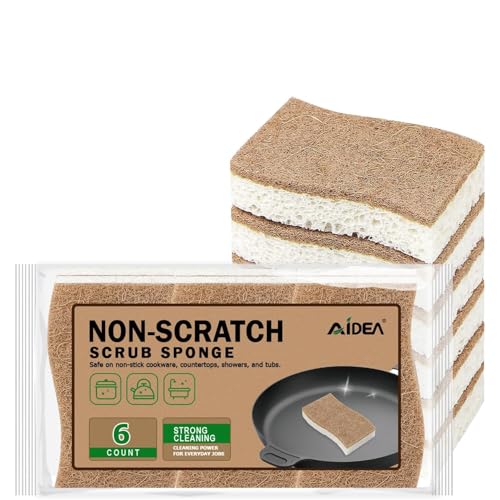
This 6-count variant mirrors the 24-count option, emphasizing gentle cleaning and protection of delicate surfaces. The non-scratch formulation remains a core feature for cookware, glassware, and ceramics, ensuring that tough residues are removed without compromising the integrity of your kitchenware. The high-density foam supports sustained resilience through multiple wash cycles.
Aheroi Natural Dish Sponge, 18 Count

Aheroi’s pack includes 18 plant-based sponges crafted from renewable wood cellulose and coconut fibers. This dual-layer design emphasizes quick absorption and robust scrubbing, supporting eco-conscious households that want a plastic-free option. The company notes a full-cycle environmental commitment, including composting at end of life and recycled packaging practices, aligning with zero-waste goals.
Buying Guide
When choosing natural sponges for dishes, consider the following factors to balance performance with environmental impact:
- Material composition: Look for cellulose, sisal hemp, loofah, or coconut fiber combinations. Each fiber has different softness, absorption, and scrubbing power. For delicate surfaces, prioritize non-scratch designs and softer fibers.
- Durability and life cycle: Check for sponges designed to resist tearing and maintain resilience after multiple uses. Durable sponges save money and reduce waste.
- Biodegradability and compostability: Confirm whether the product is labeled as biodegradable or compostable and understand your local composting guidelines for disposal.
- Ergonomics: An ergonomic shape, such as an S-curve, can minimize hand fatigue during extended cleaning sessions.
- Cleaning performance: Evaluate whether the sponge provides strong grease removal, scratch-free contact, and quick drying to prevent odor buildup.
- Packaging and sustainability: Consider brands that minimize packaging, use recycled materials, or offer recyclable packaging to align with zero-waste practices.
- Surface compatibility: For nonstick cookware and glassware, choose non-scratch or softer cellulose-based sponges to preserve coatings and finishes.
- Cost per use: Compare pack sizes and longevity to determine the best value over time, acknowledging that higher-quality natural sponges may last longer but come at a higher upfront cost.
Across perspectives, natural sponges offer a range of benefits: reduced plastic waste, safer chemical exposure, and the potential for long-term savings through durability. Some users prioritize rapid drying to minimize odor, while others seek the strongest scrubbing action for grease-heavy pots. The best choice depends on your kitchen tasks, preferred textures, and waste-reduction goals.