Porcelain pots offer a combination of non-porous surfaces, easy cleaning, and solid heat distribution that appeals to many home cooks. This guide highlights five reliable porcelain- and enamel-coated options that balance healthy materials with practical performance. Each choice is evaluated for heat retention, ease of use, and cookware versatility to help you select the right pot for stews, soups, braising, and more.
| Product | Brand | Capacity | Highlights |
|---|---|---|---|
| Granite Ware 4-Quart Bean Pot | Granite Ware | 4 qt | Porcelain enamel on steel, lightweight, non-stick surface |
| MINH LONG 2-Qt Porcelain Dutch Oven with Lid | MINH LONG | 2 qt | Lead & Cadmium Free, non-toxic, high-heat safe |
| Overmont Enameled Cast Iron Dutch Oven | Overmont | 5.5 qt | Excellent heat distribution, humidity-preserving lid |
| MINH LONG 1-Qt Porcelain Dutch Oven with Lid | MINH LONG | 1 qt | Compact, non-toxic, high-heat safe |
| SENSARTE Ceramic Nonstick Sauce Pan | SENSARTE | 1.5 qt | Ceramic nonstick, PFOA/PTFE/PFAS free |
Granite Ware 4-Quart Bean Pot

The Granite Ware bean pot uses a porcelain enamel coating over steel, providing a non-porous surface that resists staining and sticking. It is designed to distribute heat evenly, which helps prevent hot spots in soups, stews, and baked beans. The enamel surface is inert and free from harmful chemicals like PFOA and PTFE, contributing to a healthier cooking experience. Its lightweight construction simplifies handling and cleanup, making it a practical addition for everyday meals.
MINH LONG 2-Qt Porcelain Dutch Oven

This two-quart porcelain Dutch oven emphasizes non-toxicity and safety. Crafted from refined kaolinite and fired at a high temperature, it is free from lead, cadmium, PTFE, PFOA, and PFAs. Its compact size supports individual portions or small meals, while its porcelain surface preserves nutrients and flavors by providing a non-porous cooking environment. The pot is suitable for gas and infrared cooktops, and its lid helps retain moisture for soups, stews, and sauces.
Overmont Enameled Cast Iron Dutch Oven

The Overmont pot emphasizes outstanding heat mastery with a solid enamel cast iron build that delivers even heat distribution and retention. Its lid design promotes humidity and flavor preservation by condensing moisture back into the pot instead of running down the sides. This helps prevent dry or overcooked meals while offering versatility for braising, stewing, roasting, and even bread baking. The enamel finish resists chipping and is easy to clean, though it can be heavier than aluminum alternatives.
MINH LONG 2-Qt Porcelain Dutch Oven
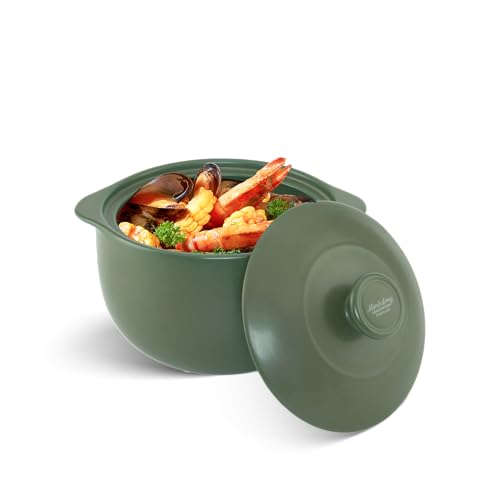
This listing presents a larger family-friendly option within the MINH LONG porcelain Dutch oven line. It emphasizes non-toxic construction with a high-heat rating and a lid designed to lock in moisture. The porcelain surface is non-porous, helping preserve nutrients and flavor across dishes like stews, pasta sauces, and one-pot meals. Its compact form remains easy to store, while the heat retention enhances simmering and slow-cooking outcomes.
SENSARTE Ceramic Nonstick Sauce Pan

This 1.5-quart saucepan from SENSARTE features a ceramic nonstick coating that is free from PFOA, PTFE, PFAS, lead, and cadmium. The non-toxic surface reduces the need for excess oil and supports healthier cooking. The pan is designed for everyday use on multiple heating surfaces, including induction, with a stay-cool handle for safety. It is a versatile option for sauces, milk-based dishes, soups, and small-batch braising.
Buying Guide: Key Purchase Considerations
- Material and coating: Porcelain enamel on steel or cast iron provides a non-porous surface that resists staining and absorbs less flavor or odor, while enamel coatings can be prone to chipping if mishandled. Choose a surface that fits your durability needs and how you plan to cook.
- Heat distribution and retention: Cast iron enamel (like Overmont) excels at even heat and long simmering, while lighter porcelain-enameled steel pots (like Granite Ware) are easier to lift and maneuver for everyday meals.
- Size and capacity: For family meals or batch cooking, larger pots (4–6 qt) support soups and stews, whereas 1–2 qt options suit singles or side dishes. Consider your usual weekly menu and storage space.
- Safety and non-toxicity: Look for lead- and cadmium-free labels and check for PFOA/PTFE-free coatings. Kaolinite-based porcelain and enamel-coated surfaces minimize chemical concerns during cooking.
- Maintenance: Porcelain enamel surfaces typically clean easily but require gentle handling to avoid chipping. Check dishwashing recommendations and whether the pot is dishwasher-safe.
- Compatibility: Ensure your cookware works with your stovetop (gas, electric, induction) and oven-safe temperatures if you plan to braise or bake with the same pot.
- Durability vs. weight: Enameled cast iron offers superb heat retention but is heavy. Lighter enamel-on-steel options are easier to lift but may heat up more quickly and require careful handling.
- Versatility: Consider if you want a single multi-use pot or a set of specialized pieces (sauce pan, Dutch oven, bean pot) to cover various recipes from sauces to stews.
In summary, porcelain pots provide a healthy cooking surface with reliable heat management. Your best choice balances capacity, weight, and intended use—whether you prioritize the even heat of a cast-iron Dutch oven or the lighter convenience of enamel-on-steel cookware for quick weeknight meals.