Choosing a reliable professional oven is essential for a bakery’s efficiency and product quality. This guide spotlights five top options that balance power, capacity, and safety for busy commercial kitchens. Each model brings distinct strengths, from convection efficiency to multi-deck capacity, helping bakers scale production without sacrificing consistency.
| Product | Brand | Key Strength |
|---|---|---|
| Kratos 29Y-057 | Kratos | High-efficiency electric convection with clear visibility |
| VEVOR Double Deck Gas Convection Oven | VEVOR | Two decks, high capacity, no external ventilation needed |
| Breville BOV900BSS Smart Oven | Breville | Versatile countertop performance with multiple functions |
| CROSSON Commercial Convection Oven | Crosson | Large, four-tier capacity with spray humidification |
| Kratos 29M-063 Double Deck Pizza Oven | Kratos | Double-deck electric pizza baking with independent chambers |
Kratos Commercial Electric Convection Oven

The Kratos 29Y-057 electric convection oven is designed for full-size, free-standing operation in restaurant-grade environments. It operates on 240V single phase and delivers up to 11 kW of heating power, supporting temperatures from 150 to 500 degrees Fahrenheit. Features include double-pane thermal glass for visibility and energy efficiency, a 30-minute timer, interior lighting, and cool-to-the-touch handles for safe, everyday operation. This model suits bakeries that require reliable, quick batch processing in a compact floor footprint.
VEVOR Double Deck Gas Convection Oven

This double-deck gas convection oven from VEVOR provides a high-capacity solution for busy bakeries. With two 40,000 BTU burners and two convection fans, it offers even heat distribution and robust batch output. The interior total capacity is 396 liters across 22 rack positions, enabling large batches such as croissants or tarts per run. Casters add mobility for flexible kitchen layouts, and the design supports efficient, quiet operation without external ventilation, a plus for smaller spaces.
Breville BOV900BSS Smart Oven Pro
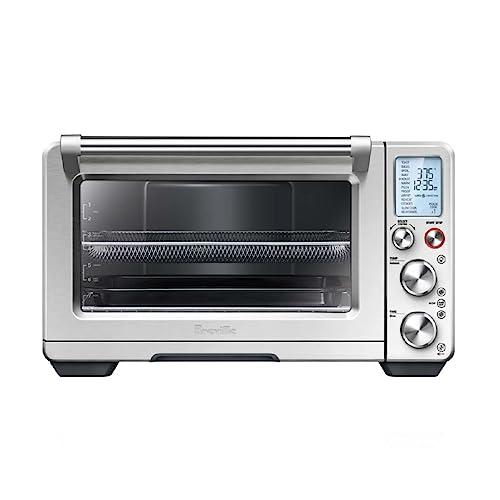
The Breville BOV900BSS Smart Oven Pro offers versatility for smaller bakeries or test kitchens. Equipped with the Element iQ system, it uses five independent quartz elements and smart algorithms to allocate power precisely, reducing hot spots. It features 13 cooking functions, interior oven lighting, and high convection performance to speed up tasks like roasting and crispy finishes. This model excels as a supplementary oven for mid-volume demand or specialty batch work.
CROSSON Commercial Convection Oven
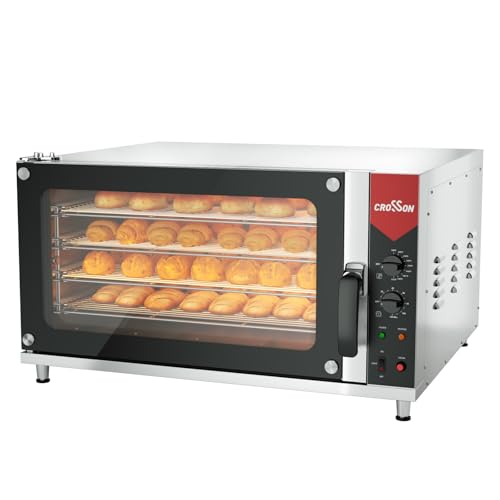
The CROSSON 125 L four-tier commercial convection oven is designed for large-volume baking. It features a 4-tier interior with a 27.24” x 21.3” x 12.23” cavity, powered by a 4500W system and a sophisticated bidirectional fan rotation that alternates every 30 seconds to ensure even heat distribution. A spray humidification function helps maintain moisture, delaying surface hardening and enabling softer, evenly baked outcomes—ideal for pastries and sheet goods in high-demand environments.
Kratos Double Deck Commercial Pizza Oven

This Kratos double-deck electric pizza oven is tailored for pizzerias and kitchens that demand two independent chambers. It can accommodate 18″ pizzas and delivers 3200W of power across 240V. The stainless steel construction ensures durability in busy environments, and the straightforward dial controls provide easy operation. A cool-to-the-touch handle enhances safety for staff handling multiple pies during peak hours.
Buying Guide
Key considerations when selecting a professional bakery oven include capacity, energy efficiency, delivery method, and maintenance footprint. Here are critical perspectives to compare:
- Capacity and layout: Single-deck vs. double-deck or multi-tier ovens determine batch size and workflow. If your throughput is high, double-deck or four-tier units dramatically increase output per hour.
- Power and voltage: Electric ovens (high wattage) require appropriate electrical infrastructure (phase, voltage, and amperage). Gas ovens offer strong heat and humidity control but need venting and gas lines. Match your kitchen’s utilities to the oven you choose.
- Heat distribution and control: Look for even heat circulation, timer options, and precise temperature control. Models with bidirectional fans or smart element control reduce hot spots and improve consistency across batches.
- Ventilation needs: Some countertop or compact units do not require external ventilation, reducing installation complexity. Larger deck ovens may need dedicated ventilation or hooding; plan accordingly for your space and local codes.
- Safety features: Cool-to-the-touch handles, clear interior visibility, and sturdy door seals help staff operate safely in busy shifts. Consider models with door locks or safety interlocks if needed for high-volume production.
- Mobility and placement: Wheeled or castered units offer flexibility for seasonal menus or cleaning schedules. Heavier deck ovens typically stay in place; ensure floor capacity supports weight distribution.
- Maintenance and parts availability: Look for durable materials (stainless steel), easy-access steam or moisture release, and readily available replacement parts to minimize downtime.
- Specialty features: Humidification, spray systems, or multiple cooking modes can be advantageous for pastry textures, moisture retention, or sugar work. Assess whether these features align with your product line.
For bakeries prioritizing throughput and consistency, a dual-deck or double-chamber configuration can be a strong choice, often offering greater batch capacity with comparable footprint. Countertop models provide flexibility for specialty items or seasonal menus and can serve as valuable complements to larger deck ovens. Always verify electrical and gas requirements, installation needs, and warranty coverage before purchasing.