Finding the right stand mixer as a beginner can be about size, power, and ease of use. This guide highlights five user-friendly options that balance compact designs with reliable performance. Each choice offers accessible features that help new bakers build confidence while delivering solid results for everyday recipes—from doughs to batters and whipped creams.
| Product | Brand | Capacity | Key Benefit |
|---|---|---|---|
| Kitchen in the box Stand Mixer, 3.2 Qt (Blue) | Kitchen in the box | 3.2 Qt | Lightweight, compact, color variety |
| Kitchen in the box Stand Mixer, 3.2 Qt (Black) | Kitchen in the box | 3.2 Qt | Space-saving, easy to store |
| KitchenAid Classic Series 4.5 Quart Tilt-Head (K45SS) White | KitchenAid | 4.5 Qt | Reliable performance, tilt-head access |
| Electactic Stand Mixer With 12 Speed, 5.3 Quart | Electactic | 5.3 Qt | Multiple speeds and attachments |
| Kitchen in the box Stand Mixer, 8.5 Qt | Kitchen in the box | 8.5 Qt | Powerful for dough and family baking |
Note: Each product featured here comes with a tilt-head design, multiple speeds, and included mixing attachments to suit a variety of beginner-friendly recipes. The entries cover compact options for small kitchens as well as larger-capacity models for family use.
Kitchen in the box Stand Mixer, 3.2 Qt (Blue)
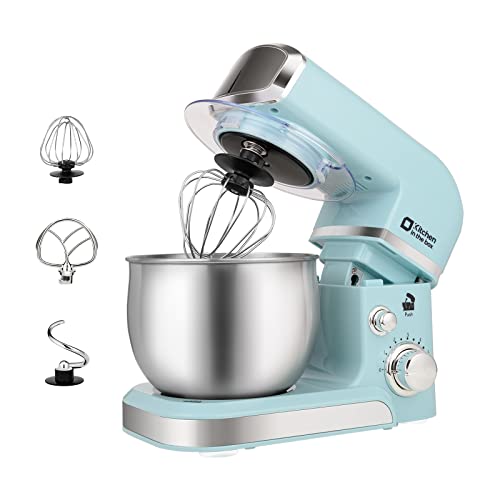
The 3.2-quart capacity makes this mini mixer ideal for new bakers who bake for small households. Its tilt-head design allows quick access to the bowl and attachments, simplifying setup and cleanup. Weighing under 7 pounds and measuring roughly 12.9 x 7 x 10.2 inches, it fits neatly on compact counters or shelves. Six speed settings cover tasks from gentle stirring to thicker dough, while four anti-slip suckers keep the unit stable during operation—an important factor for first-time users learning to throttle power safely.
Key features include a lightweight build, diverse color options to match kitchen decor, a transparent lid to minimize splatter, and a 3.2-quart stainless steel bowl suitable for 1–2 person servings. It’s well-suited for beginners who want a low-commitment appliance that still handles basic doughs, batters, and whipping reliably.
Kitchen in the box Stand Mixer, 3.2 Qt (Black)
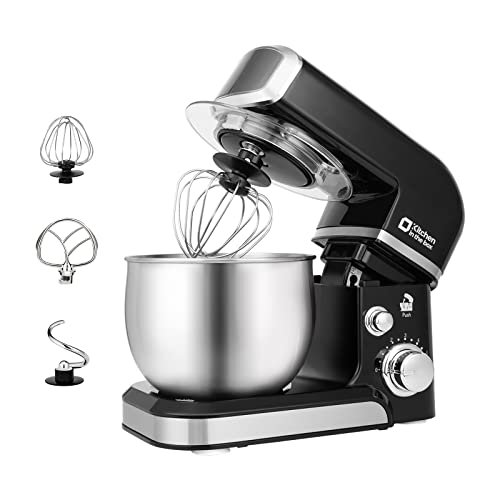
This compact black model mirrors the blue variant in size and features, focusing on space-saving design with a 12.9 x 7 x 10.2 inch footprint and under 7 pounds. The tilt-head access makes bowl and accessory changes simple for beginners, and the 6-speed control completes tasks ranging from light mixing to medium-density doughs. Four anti-slip suckers reduce movement while mixing, which helps new bakers maintain control and reduce countertop messes.
Its 3.2-quart stainless steel bowl is adequate for a small family or couple. The transparent anti-splash lid helps prevent spills during heavy mixing, making it a practical choice for novices who are still mastering ingredient management.
KitchenAid Classic Series 4.5 Quart Tilt-Head Stand Mixer K45SS, Onyx Black
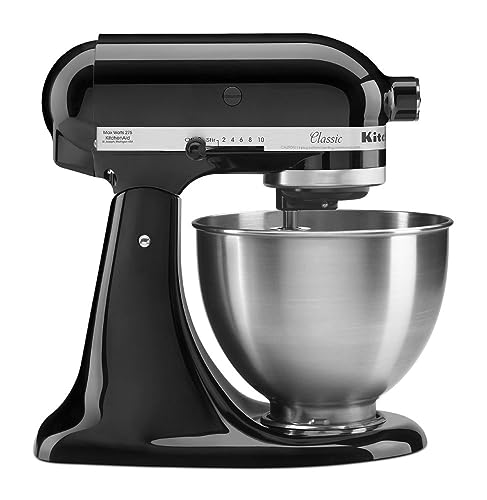
Built for longevity, this tilt-head model from a trusted brand offers a larger 4.5-quart bowl and 59 touchpoints around the bowl for thorough mixing. The tilt-head design provides better access to the bowl, streamlining ingredient addition and cleanup. While sized for more ambitious tasks than mini models, it remains approachable for beginners who want reliability and room to grow. The flat beater is a standard included accessory, and the bowl is dishwasher-safe for ease of cleaning after baking sessions.
With its durable metal construction, this mixer is designed to withstand frequent use without complexity. It’s a solid step up for beginners who anticipate expanding into more recipes and larger batches as confidence builds.
Electactic Stand Mixer With 12 Speed, 5.3 Quart

Electactic offers a 12-speed controller and a 300W motor, delivering a wide range of mixing options suitable for beginners who want versatility. The package includes a whisk, dough hook, flat beater, spatula, and an egg white separator spoon, making it a comprehensive starter kit. The mixer’s dimensions keep it relatively compact for a larger-capacity model, and the splash-proof lid with an entry hatch helps minimize countertop mess while adding ingredients mid-task. This model is well-suited for learners who plan to tackle bread doughs and thicker batters.
Users benefit from a sturdy build and a diverse attachment lineup, which support gradual skill development from whisking delicate meringues to kneading dough without needing multiple devices.
Buying Guide
Key purchase considerations
- Capacity: Beginners typically start with 3.2–4.5 quart bowls for personal or small-family baking. Larger bowls (8.5 qt) suit frequent bakers or bigger batches but require more counter space and power.
- Power and speed: Look for at least 300W-equivalent power for reliable kneading and mixing. A range of speeds (at least 6–12) helps adapt to batters, doughs, and whip stages.
- Tilting head vs. locked bowl: Tilt-head designs offer easy access for adding ingredients and cleaning, which is helpful for beginners learning the process.
- Stability: Anti-slip feet or suction cups prevent movement during operation, improving control and safety for new users.
- Attachments: Starter sets including a flat beater, dough hook, and whisk simplify a wide range of recipes. Splash guards reduce mess during mixing.
- Size and storage: For small kitchens, compact models that fit under cabinets with a small footprint are advantageous.
- Maintenance: Dishwasher-safe bowls and accessories save time and encourage regular use.
- Brand and durability: Reputable brands generally offer longer warranties and better availability of replacement parts and accessories.
- Beginner vs. advanced features: Start with a model that covers essential tasks (dough, batter, and whipped cream) before moving to premium features.
- Noise level: Some models can be louder; if quiet operation matters, consider user reviews and 6–12 speed ranges designed for low-speed dough work.
- Budget considerations: Entry-level options often balance price with essential capabilities; growth-ready models provide more capacity and power without overwhelming a new user.