Seasonal canning calls for reliable tomato strainers that produce smooth, seed-free sauces with minimal effort. The following hand-crank and electric models provide strong performance, easy cleanup, and sturdy construction for hobbyists and small-scale producers alike. Below you’ll find five strong options with diverse features to match kitchen setups and processing goals.
Buying Snapshot
Use this quick table to compare the highlighted tomato strainers and their standout attributes.
| Product | Brand | Key Feature | Hopper/Capacity |
|---|---|---|---|
| Weston Metal Tomato Strainer | Weston | Large 1 gallon hopper; dual mount; easy skin/seed removal | 1 gallon |
| ARINOO Electric Tomato Strainer | ARINOO | Automatic straining; 0.6 HP motor; quiet operation | Electric, high throughput |
| Reber Electric Tomato Strainer N.3 | Reber | Italian-made heavy-duty; continuous use; induction motor | Industrial-grade |
| VBENLEM Electric Tomato Strainer | VBENLEM | Stainless steel build; 370W copper motor; large feed funnel | High capacity |
| OMRA Spremy Electric Tomato Strainer | Imperia | Automatic puree extraction; 330 lbs/h; die-cast housing | High volume |
Each model has distinct strengths—from classic hand-crank efficiency to robust electric power for busy canning days. Consider your kitchen space, batch size, noise tolerance, and cleaning ease when choosing the right fit for your tomato processing workflow.
Weston Metal Tomato Strainer
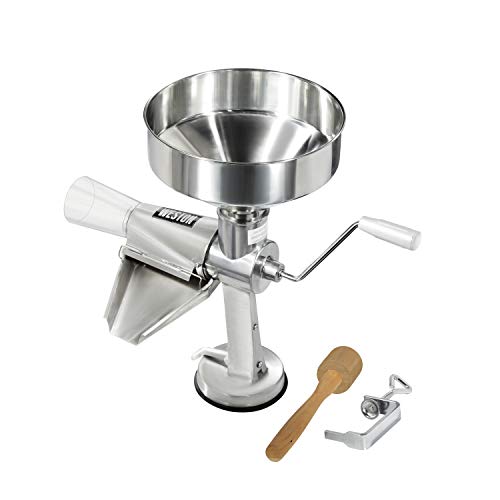
The Weston model features a durable stainless steel hopper with a generous 1 gallon capacity, enabling processing of large batches without frequent interruptions. Its dual-mount base—combining suction-cup stability with a C-clamp option—allows secure use on various flat surfaces, including kitchen counters or outdoor tables. A key convenience is the handle design that smoothly turns to remove skins and separate seeds, reducing prep time and yielding smoother sauces and preserves.
Designed for versatility, this strainer works well for tomato sauce, purees, jams, and even salsa. The stainless construction resists corrosion and is built to endure repeated use. It’s suitable for hobby canners who want reliable performance without electrical power, as well as those who occasionally switch to outdoor setups.
ARINOO Electric Tomato Strainer
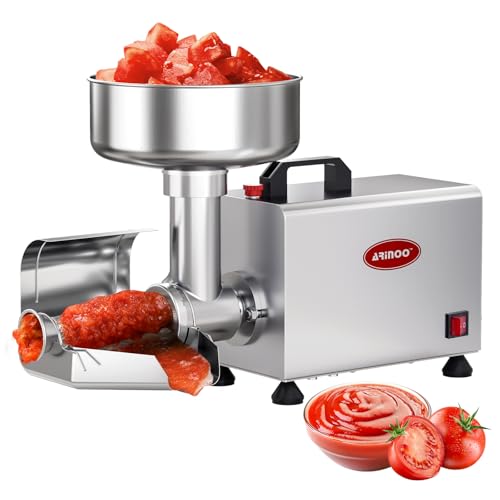
ARINOO offers an electric solution with a dual-channel design that separates pulp and waste in one pass, producing ultra-smooth, seed-free tomato sauce or jam with minimal extra filtering. A 0.6 HP pure copper motor provides robust juice extraction rates, while built-in noise reduction keeps operation quieter than many industrial models. The 304 stainless steel construction resists corrosion and deformation, ensuring long-term durability in damp or busy kitchen environments.
Ideal for medium-to-large batches, this strainer excels in commercial or high-volume home canning. It reduces labor and speeds up sauce production, making it a practical choice for serious tomato processing without sacrificing product quality. Cleaning is simplified by stainless components designed to resist rust and heat exposure during frequent use.
Reber Electric Tomato Strainer N.3

Reber’s N.3 model emphasizes Italian-made quality with a heavy-duty 0.3 HP motor capable of processing up to 300 pounds of tomatoes per hour. It’s designed for continuous use and built with durable stainless components to withstand frequent cleaning and high-volume operation. The induction-motor drive provides reliable performance with steady output and good torque for tougher varieties.
For canners seeking consistent throughput in a compact footprint, this unit offers a balance of power and portability. While it leans into more traditional design, its engineering emphasizes longevity and dependable strain performance across various tomato types and maturities. This is a strong mid-range option for enthusiasts expanding from manual press systems.
KITCHEN CROP Tomato/Apple Screen

Designed as an accessory screen for the VKP250 Food Strainer, this stainless steel screen is built to last and provides a precise cut for tomato and apple processing. Holes measure 0.057 inches, ideal for producing smooth sauces while effectively removing seeds and skins. This model is especially suited for users who want a compatible, durable screen that preserves the fine texture of the final product.
It’s a practical add-on for crafters who focus on consistent texture in sauces and fruit products. While not a standalone strainer, it complements the VKP250-based workflow by delivering reliable results in repeated use scenarios. The stainless construction supports long-term use in a busy canning environment.
OMRA Spremy Electric Tomato Strainer

The OMRA Spremy from Imperia is a compact electric strainer designed for continuous tomato processing. It features automatic puree extraction, separating seeds and skins while maintaining a steady output. With a 330 pounds per hour capacity and a robust die-cast housing, this unit balances power with a relatively small footprint, making it a favored choice for small- to mid-size canneries or home setups that demand consistent throughput.
Its stainless hopper and food-grade nylon auger support clean handling of hot, juicy tomatoes. The continuous-use design suits long canning sessions, where maintaining speed and efficiency reduces downtime between batches. It’s a reliable option for households seeking a strong electric option with Italian engineering heritage.
Buying Guide: Key Considerations For Tomato Strainers
- Processing capacity: Determine batch size and select a model with an appropriate hourly throughput to minimize downtime between runs.
- Power source: Choose between manual or electric based on kitchen layout, noise tolerance, and the volume of canning you perform.
- Construction materials: Stainless steel housings and food-grade components improve durability and ease of cleaning, especially in damp environments.
- Texture control: Look for systems that effectively separate skins and seeds to achieve smooth sauces without compromising flavor.
- Compatibility and accessory options: Consider models that offer compatible screens, stands, or upgradeable components for extended use.
- Portability and space: Dual-mount bases and compact footprints help when workspace is limited or when canning outdoors.
- Maintenance: Easy disassembly and dishwasher-safe parts can significantly cut down on post-canning cleanups.
- Cost vs. value: Balance initial price with expected lifespan, capacity, and the level of automation you actually need.
When evaluating options, align your choice with batch size, available space, and whether you prioritize speed, ease of use, or the traditional hands-on experience of a manual press. Electric models excel in high-volume situations, while manual presses provide simplicity and portability without power concerns. Always verify availability of replacement screens and spare parts to protect long-term performance.