The bird’s beak paring knife is a specialized tool designed for delicate, curved cuts on fruit and vegetables. This guide highlights five top options, focusing on edge retention, blade geometry, and ergonomic handling to help you select a reliable companion for intricate prep tasks.
| Product | Brand | Blade Size | Key Benefit |
|---|---|---|---|
| OAKSWARE Bird Beak Paring Knife | OAKSWARE | 2.75 inch | German stainless steel, razor-sharp edge, ergonomic full tang |
| Babish Birds Beak Peeling Paring Tourne Knife | Babish | 2.4 inch | High-carbon German steel, precision edge, compact handling |
| TUO Bird Beak Paring Knife (Black Hawk) | TUO | 2.75 inch | German stainless steel, 11°-15° edge per side, ergonomic handle |
| CoquusAid Paring Knife Set | CoquusAid | 2.75 inch bird beak; 3.8 inch paring knife | Two-piece set, high-carbon stainless blades, anti-slip handles |
| Shun Classic 2 1/2″ Bird’s Beak Knife | Shun | 2.5 inch | VG-MAX steel with Damascus cladding, expert craftsmanship, long edge life |
OAKSWARE Bird Beak Paring Knife

The 2.75-inch OAKSWARE bird beak paring knife is designed for compact, precise peeling on curved surfaces. Its blade uses imported German stainless steel and is hand-sharpened to a sharp edge to maximize cutting performance. The knife’s beak shape excels at trimming potatoes, apples, and other round produce, with front-end precision ideal for decorative garnishes. The ergonomic, full-tang handle supports controlled handling during detail work.
Key features: versatile paring profile, razor-sharp edge, and a blade geometry optimized for curved surfaces. Users should exercise care due to its sharpness, especially for novice cooks.
Babish Birds Beak Peeling Paring Tourne Knife
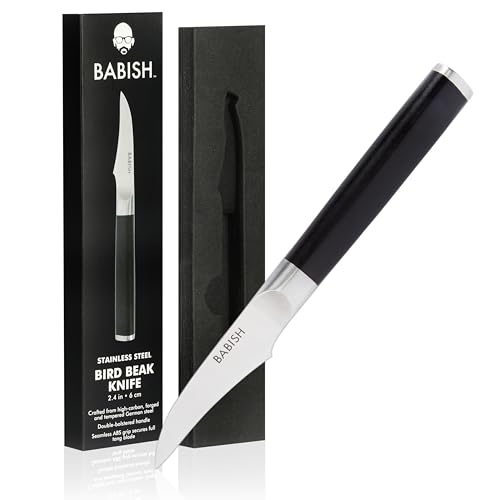
The Babish knife offers a 2.4-inch German steel blade with a high-carbon content (1.4116), tempered and ground for maximum sharpness. A 13-degree cutting edge angle promotes precise, clean cuts on small fruits and vegetables. Its compact size supports detailed peeling and decorative work, while the metal-stamped blade provides dependable edge retention and simple maintenance.
TUO Bird Beak Paring Knife, 2.5 Inch

The TUO 2.5-inch bird beak paring knife is built for handling curved produce with speed and control. It uses premium German stainless steel and features a hardness of HRC56±2, with a 14-degree edge per side honed via professional methods. The ergonomic pakkawood handle reduces fatigue during long prep sessions, making it a strong choice for detailed peeling and garnish work.
CoquusAid Paring Knife Set

The CoquusAid set includes a 3.8-inch paring knife and a 2.75-inch bird beak paring knife. Made from high-carbon stainless steel, these blades are finely polished for sharpness and precision. The ergonomic, anti-slip handles promote safe cutting, and the set offers space-saving convenience by nesting neatly in a kitchen drawer. They are well-suited for peeling, slicing, and decorative trimming of fruit and vegetables.
Shun Classic 2 1/2″ Bird’s Beak Knife

The Shun Classic 2.5-inch bird’s beak knife blends traditional Japanese craftsmanship with modern performance. VG-MAX steel and a 68-layer Damascus cladding deliver exceptional sharpness and edge retention, with a beveled edge at approximately 16 degrees. This knife supports decorative slicing and precise detailing, making it a premium option for presentation work in the kitchen.
Buying Guide: Key Purchase Considerations
- Blade material and hardness: Higher carbon content and solid steel alloys (e.g., German stainless steel, VG-MMAX) typically offer better edge retention and ease of maintenance, but may require more care to prevent corrosion in humid kitchens.
- Blade geometry: The bird beak shape excels at curved peeling and garnish work. A shorter, curved blade offers maximum control for small fruits and decorative cuts, while a slightly longer blade can handle larger items more efficiently.
- Edge angle and sharpening: Angles around 11°–15° per side provide a sharp, precise edge for detailed work. Regular honing and proper hand washing preserve edge life.
- Handle design and comfort: Ergonomic, non-slip handles reduce fatigue during extended prep sessions. Materials like pakkawood and full tang designs improve balance and durability.
- Maintenance and care: Hand washing is generally recommended for high-end knives to preserve coatings and blades. Dry thoroughly to prevent rust or staining.
- Set versus single knives: Sets with a bird beak and a standard paring knife offer versatile options for varied tasks, from peeling delicate skins to more robust trimming tasks.
- Budget versus performance: Premium brands (Shun, Dalstrong) deliver high craftsmanship and long-term durability, while more affordable options (TUO, CoquusAid) provide reliable performance for everyday use.
- Use-case fit: Consider how often you perform decorative garnishes or intricate trims. If you regularly work with small fruits or citrus segments, a compact bird beak is especially beneficial.