Choosing a dough machine for pizza can streamline prep, improve consistency, and reduce manual kneading. This guide highlights five reliable options that cover different needs—whether you’re feeding a family, a small cafe, or a busy bakery. Each pick leverages sturdy materials, practical features, and user-friendly designs to help you achieve smooth, elastic dough ready for thin-crust or deep-dish pizzas.
Summary of chosen products:
| Product | Brand | Capacity / Size | Key Benefit |
|---|---|---|---|
| VEVOR Manual Pizza Dough Press Machine | VEVOR | 9.5 inch press | Even, consistent dough forming for pizzas and flatbreads |
| Joydeem Electric Dough Maker with Ferment Function | JOYDEEM | 7.4 Qt | Automated kneading and proofing with smart presets |
| Pizza Dough Roller Sheeter | HASANEN | 11.81″ upper / 16.53″ lower rollers | High-volume dough rolling for uniform sheets |
| VONCI Electric Dough Maker with Ferment Function | VONCI | 7.3 Qt | Fermentation and kneading in one compact unit |
| 4-12 Inch Commercial Pizza Dough Roller | LTIGOAW | 4-12 inch dough width | Efficient dough pressing for multiple pizza sizes |
VEVOR Manual Pizza Dough Press Machine

The VEVOR press features a 9.5-inch pressing surface suitable for shaping dough into round pizzas, tortillas, and flatbreads. The vertical pressing design promotes even dough distribution, and a widened base enhances stability for consistent results. A high-strength spring automatically rebounds after each press, achieving uniform thickness around 5 mm. The ergonomic lever reduces effort, making manual pressing practical in light commercial settings or home kitchens.
Joydeem Electric Dough Maker with Ferment Function

Joydeem’s unit combines kneading, proofing, and fermentation in one compact appliance. A microcomputer controls preset programs, with a 7.4 Qt capacity and a 250W motor to handle dough for bread, pizza, buns, and dumplings. After selecting a program, kneading completes in about 15 minutes and proofing concludes in roughly 45 minutes, with alerts for reminders. Its face-up panel and suction-cup feet offer space-saving operation and reduced vibration in busy kitchens.
Pizza Dough Roller Sheeter

HASANEN’s roller sheet carries an 11.81-inch upper and 16.53-inch lower roller setup, enabling rapid, consistent dough flattening. The stainless steel frame resists corrosion, while food-grade rollers ensure safe contact with dough. A 370W copper motor drives the rollers, and adjustable thickness lets you dial in sizes from 0.7 mm to 5.4 mm. Rubber feet provide stability during operation, making it suitable for small bakeries or pizzerias that need fast throughput.
VONCI Electric Dough Maker with Ferment Function

The VONCI model provides a 7.3 Qt stainless steel bowl and a microcomputer-controlled kneading and proofing cycle. It features a gentle heating element to maintain fermentation temperatures in a safe range, ideal for doughs destined for pizza. A transparent lid with a feed chute allows adding ingredients mid-cycle, while non-slip suction feet minimize vibration. This unit is suited for households and small kitchens needing reliable, hands-off dough preparation.
4-12 Inch Commercial Pizza Dough Roller
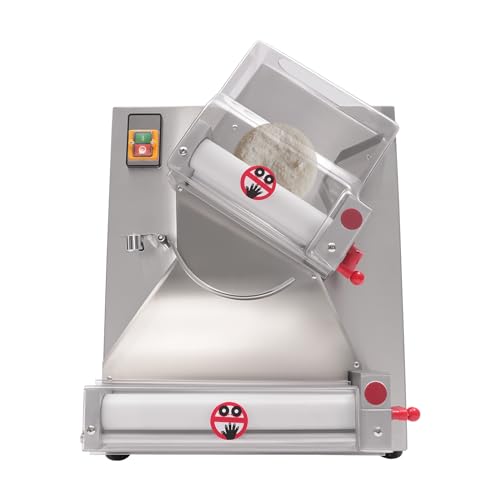
This LTIGOAW roller offers a dual-roller design with an 8.5-inch top and 13.6-inch bottom roller, enabling fast, uniform dough flattening. The machine supports dough thickness adjustments via side knobs, making it easy to standardize across different pizza sizes. Built with stainless steel and food-grade components, it aims for durability in a busy kitchen environment and helps streamline production without sacrificing dough integrity.
Joydeem Electric Dough Maker with Ferment Function (HMJ-A501)

This Joydeem model presents a 5 Qt capacity with a focus on versatility for bread, pizza, roti, dumplings, and sourdough. The device supports automated kneading and fermentation, and its compact footprint suits mid-sized kitchens. While offering less capacity than larger models, it remains a practical choice for households requiring dependable dough preparation with fermentation control.
Buying Guide: Key Purchase Considerations
- Purpose and capacity: Pick a model that matches your typical batch size. Home cooks may prefer 5–7 Qt units; small cafes may benefit from 7–7.4 Qt or higher, while compact rollers suit limited spaces.
- Kneading vs. rolling: Decide between kneading-and-fermenting machines and dough-roller/press setups. Rollers excel in speed for flat dough sheets; kneader-fermenters offer more integrated dough creation and rising.
- Fermentation control: If dough flavor and texture rely on precise fermentation, choose a unit with stable temperature control and reliable timing, especially for sourdough and enriched doughs.
- Materials and durability: Stainless steel bodies and food-grade rollers ensure longevity and safe food contact. Look for rust resistance and sturdy construction for frequent use.
- Noise and footprint: Machines with suction feet and modern control panels tend to run quietly and fit smaller kitchens. Consider counter space and storage needs.
- Ease of use and cleaning: Models with simple presets and removable bowls or components simplify day-to-day use. Check for dishwasher-safe parts if available.
- Safety and maintenance: Ensure stable bases and proper safety features. Regular maintenance schedules help extend the life of your dough equipment.
- Warranty and support: Compare warranty length and supplier support, especially for commercial-grade equipment that may see heavy use.
Across these options, the best choice depends on your workflow. For quick sheet dough in busy settings, a roller or press offers speed and consistency. For doughs requiring precise fermentation and kneading, a microcomputer-controlled mixer with a fermentation function is advantageous. Balancing capacity, space, and budget will guide the optimal pick for producing pizza crusts that meet your house standards and customer expectations.