Choosing the right insulated bento box can keep hot lunches deliciously fresh while simplifying meal prep. This guide highlights five top options designed to keep entrees warm, while still accommodating cold items for a complete meal. Each pick includes key features to help you compare durability, capacity, and ease of use.
| Product | Brand | Highlights |
|---|---|---|
| OmieBox Meadow | Omie | 3 compartments; two temperature zones; leakproof; durable |
| OmieBox Blue Sky | Omie | Two-zone design; built-in insulated jar; kid-friendly |
| wiwens 32oz Thermo | wiwens | Double-wall stainless; long heat retention; leakproof |
| BEVISS Insulated Bento | BEVISS | 18/8 stainless; 3-tier; included bag |
| Lille Home 3-Tier | Lille Home | Three tiers; leak-proof; versatile |
OmieBox Meadow: All-In-One Temperature Control

The OmieBox Meadow is designed to keep hot entrees and cold sides in a single, organized container. Its built-in insulated jar allows warm meals like pasta or rice to be served with fresh fruits and veggies in the same lunch box. This layout reduces the need for multiple containers and keeps meals kid-ready with minimal prep.
Durability and long-term use are emphasized; parts such as seals and dividers are replaceable so the box can last for years. The three-compartment design ensures separation of flavors, while a leakproof construction prevents messes in transit. It’s suited for daily school use and busy mornings, offering reliable performance without a lot of maintenance.
OmieBox Blue Sky: Two-Temperature Family Favorite

This variant mirrors the Meadow’s core benefit—pack hot and cold foods side by side in one unit. Its two-temperature zones help keep a warm entree separate from cold fruits, improving the overall meal experience. The built-in insulated container is a key feature for busy families seeking convenience and consistency in lunch temperatures.
As with other OmieBox models, durability and ease of maintenance are highlighted. The design supports everyday use and is favored by parents for reducing morning prep time and eliminating the need for extra containers. Replacement seals and dividers help extend the life of the product beyond the initial purchase.
wiwens Thermo Food Jar: 32OZ For Hot Meals

The wiwens 32-ounce thermo jar is built to preserve temperatures for extended periods. Its double-wall vacuum insulation can keep hot foods hot for several hours, making it suitable for longer days, commutes, or late lunch breaks. The inner bowl is designed to separate foods, reducing cross-contamination and maintaining distinct flavors.
Leak prevention is a standout feature: a silicone seal, fixed thread rotation, and a leak-resistant lid contribute to a reliable portable option. A hidden handle and folding spoon add portability, and a non-slip base minimizes movement during transit.
Lille Home: 3-Tier Stainless Steel Bento
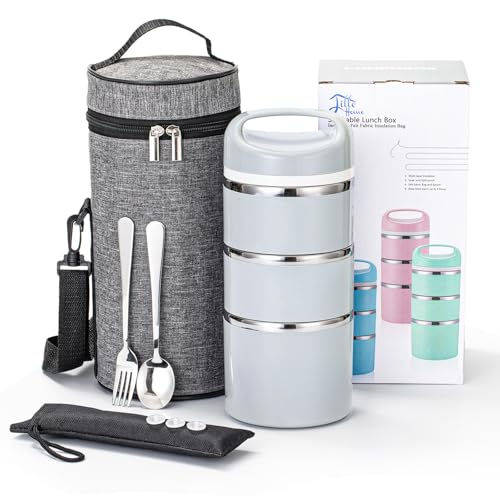
This 3-tier design supports diverse meal planning, offering multiple compartments for hot and cold items. Heavy-duty silicone seals between tiers prevent leaks and odors, while each stack locks securely to avoid spills. The interior stainless steel construction resists flavors and is BPA-free, ensuring safe daily use.
The set includes extra silicone seals, providing long-term maintenance options. It’s a versatile choice for families who like to portion meals and adapt the container to various meal types, from soups to salads and main dishes.
OmieBox Pink Berry: Classic Two-Temperature Box

The Pink Berry edition brings the same core benefits as other OmieBox models: a built-in insulated food jar and multiple compartments to separate hot and cold items. The design aims to simplify lunch prep while ensuring temperature control remains consistent throughout the day.
Like its siblings, it emphasizes longevity and ease of maintenance. Replacement seals and dividers help keep the box functioning well after heavy use, making it a practical option for families who want a single, reliable lunch solution.
Buying Guide: Key Purchase Considerations
- Temperature Zone Design: Decide whether you need two temperature zones or a single, versatile layout. Two-zone designs are great for hot entrées paired with cold sides, while single-zone models may be lighter and simpler.
- Insulation Quality: Look for double-wall vacuum insulation for best heat retention. Stainless steel interiors resist flavors and stains, aiding long-term cleanliness.
- Leakage Prevention: Verify that lids, seals, and dividers are designed to prevent leaks between compartments. Replaceable seals can extend the life of the box.
- Durability and Materials: Stainless steel interiors and BPA-free plastics are generally safer and more durable for daily use, especially for kids. Consider ease of cleaning and dishwasher compatibility.
- Portability: Features like hidden handles, foldable spoons, and non-slip bases enhance everyday use, particularly for school commuters and office workers.
- Capacity and Layout: Assess whether the number of compartments meets your meal planning needs. Some models offer extra tiers; others prioritize a compact, portable design.
- Maintenance: Consider whether parts are replaceable (seals, dividers) and if the set includes a bag or carrying case to protect the container during transport.
- Age-appropriateness: For kids, look for easy-open buckles and kid-friendly designs while ensuring the container is durable enough to withstand daily use.
Overall, choosing the right insulated bento box for hot meals involves balancing temperature performance, durability, and ease of use. The options above provide a range of styles—from compact two-zone boxes to spacious three-tier systems—so you can select a model that fits your lifestyle, whether it’s school, work, or on-the-go dining. Consider how you will pack meals, the typical duration between packing and eating, and who will use the box most often to inform your decision.