Beets and carrots are powerhouse ingredients for healthful juices. The right juicer can handle dense vegetables, preserve nutrients, and deliver smooth, pulp-free beverages. This guide highlights five top options that balance performance, ease of use, and cleaning practicality. Each section links to Amazon for quick viewing and potential purchase, and the buying guide at the end covers key considerations to help you pick confidently.
| Product | Brand | Type | Chute Width | Notable Benefit |
|---|---|---|---|---|
| EanOruus Juicer Machines | EanOruus | 3-in-1 Cold Press | 6.5 inches | Large capacity, juice, sorbet, and nut milk options |
| Cold Press Juicer by ACOQOOS | ACOQOOS | Cold Press Slow Juicer | 5.3 inches | High juice yield, easy cleanup |
| Hamilton Beach Juicer Machine | Hamilton Beach | Centrifugal Juicer | 3 inches | Big mouth chute, dishwasher-safe parts |
| Cold Press Juicer by LQZ | LQZ | Cold Press Slow Juicer | 5.4 inches | Good juice yield, whole-fruit juicing |
| Airpher 400W Cold Press Juicer | Airpher | Cold Press Slow Juicer | 5.8 inches | High juice yield, easy to clean |
EanOruus 3-in-1 Cold Press Juicer

EanOruus offers a versatile 3-in-1 setup designed for juicing, sorbet making, and nut milk. Its two interchangeable strainers allow quick switching between extracting juice and making frozen treats, expanding the range of recipes you can tackle with beets, carrots, and other produce. The juicer features a 6.5-inch mega-wide chute to reduce prep work, and an extra-large 100-ounce hopper to minimize refilling during large batches. This model emphasizes time-saving efficiency for busy households and meal preppers looking to batch fresh juice and treats.
ACOQOOS Cold Press Juicer
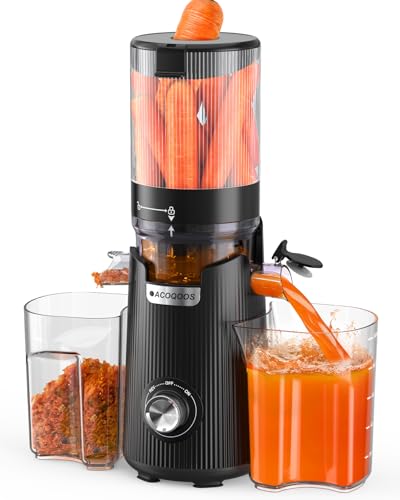
ACQOOS delivers a professional-grade slow juicing experience with a 5.3-inch feed chute and a 1.8-liter hopper. It promises a remarkable 99.6% juice yield by preserving nutrients during the slow masticating process. The design prioritizes user convenience with a straightforward rinse-to-clean workflow, and the large chute minimizes pre-cutting—ideal for beets and carrots prepared for daily juicing routines.
Hamilton Beach Big Mouth Juicer

Hamilton Beach is a trusted name with a centrifugal design featuring a large 3-inch feed chute and 800-watt motor. It’s optimized for quickly processing whole fruits and vegetables, reducing the need for pre-cutting—a practical option when juicing beets and carrots together. The model emphasizes value with dishwasher-safe, removable parts and a substantial pulp bin, making cleanup and ongoing use straightforward for families and casual juicers alike.
LQZ Cold Press Juicer

LQZ emphasizes a 5.4-inch wide feed chute and a powerful yet quiet 350W motor. Its slow masticating design helps minimize heat buildup, preserving vitamins and minerals in beets and carrots. The packaging highlights efficient juice extraction and a user-friendly cleaning experience, appealing to daily juicers who value nutrient retention and a straightforward assembly/disassembly process.
Airpher 400W Cold Press Juicer

Airpher combines a 400-watt motor with a 5.8-inch wide feed chute and slow masticating action to maximize juice yield while keeping oxidation low. The design focuses on a high-yield, nutrient-packed juice experience suitable for beets and carrots, with an emphasis on easy cleaning and ongoing reliability, making it a practical choice for households that juice frequently and value consistent results.
Buying Guide: Key Purchase Considerations
- Juicing technology: Cold press (slow) juicers preserve enzymes, vitamins, and minerals better than most centrifugal models, which can generate more heat and oxidation. If you primarily juice beets and carrots for health benefits, a slow juicer typically offers higher nutrient retention and smoother juice.
- Chute width and hopper capacity: A wider chute reduces prep time, especially when juicing root vegetables. Look for at least 5 inches if you want to feed whole beets or large carrot bunches without pre-cutting.
- Juice yield and pulp control: Models with higher juice yield and low pulp waste are preferable. Some juicers advertise up to 99% juice yield; consider how much pulp you’re willing to manage.
- Ease of cleaning: Dishwasher-safe parts and simple assembly are major time savers. A rinse-to-clean design can significantly cut down post-juicing cleanup time.
- Versatility: If you enjoy more than juice—such as sorbet, nut milk, or ice cream—look for 3-in-1 or multi-function units. This can justify the investment for diverse recipes.
- Motor power and stability: For dense vegetables like beets, a sturdy motor and solid construction reduce clogging and improve longevity. Consider models with self-feeding design to minimize prep.
- Maintenance and replacement parts: Check for accessible filters, strainers, and availability of replacement parts. Longevity matters for frequent juicing.
- Warranty and brand support: A longer warranty and reputable customer support can be valuable for peace of mind when choosing a higher-cost appliance.
- Noise level and kitchen footprint: Slow juicers are typically quieter than centrifugal models, but some compact designs still produce noticeable sound. Consider your kitchen layout and tolerance for noise.
- Finish and aesthetics: Since you’ll likely keep the juicer on the counter, a design that matches your kitchen style can be a deciding factor for everyday use.
When selecting a juicer for beets and carrots, prioritize models that handle dense vegetables smoothly, offer high juice yield, and minimize pre-cutting. If you value convenience and multi-functionality, a versatile 3-in-1 or slow juicer with a wide chute can optimize your daily routines while delivering nutrient-rich beverages.