Finding a sharp edge on serrated blades requires the right tool. This guide reviews top-rated sharpeners that effectively restore serrated knives while also handling straight-edged blades. Each option balances ease of use, safety, and results, helping American cooks maintain razor-sharp serrations with minimal effort.
| Product | Brand | Key Benefit |
|---|---|---|
| Orange Ninja 4-Stage Knife Sharpener & Serrated Knife Sharpener | Sharp Pebble | 4-slot system with dedicated serrated slot; easy three-step sharpening |
| SHARPAL 191H Knife & Scissors Sharpener | SHARPAL | Three-stage sharpening; strong suction base for stability |
| Diamond Machining Technology (DMT) Diafold Serrated Sharpener, Fine | DMT | Diamond-based serration sharpening; portable and lightweight |
| SHARPAL 104N 5-in-1 Sharpener | SHARPAL | Five stages; dedicated serrated sharpening; built-in scissor sharpener |
| KitchenIQ Edge Grip 2-Stage Knife Sharpener | KitchenIQ | Compact with edge grip and two stages for serrated and straight blades |
Below are five highlighted options that stand out for serrated knives, followed by a practical buying guide to help you choose the best tool for your kitchen setup.
Orange Ninja 4-Stage Sharpener

The Orange Ninja sharpener from Sharp Pebble combines a 4-slot system designed to cover damaged blades, general sharpening, polishing, and specifically serrated edges. Its coarse carbide blades straighten blades, the medium diamond slot sharpens, the fine slot polishes, and the dedicated serrated slot targets serrations. The three-step process—coarse, medium, and fine—remains simple, delivering a quick, razor-like edge. Ergonomic, non-slip grip and a universal design support both left- and right-handed users, enabling fast restoration of kitchen knives.
SHARPAL 191H Knife & Scissors Sharpener

The SHARPAL 191H provides a versatile 3-stage sharpening system with tungsten carbide blades for quick edge setting, a ceramic blade for honing, and another tungsten carbide stage for sharpening scissors. Its enhanced suction base helps keep the sharpener stable on smooth surfaces, contributing to safer operation. A user-friendly design allows operation by both left- and right-handed users, while the compact footprint makes it suitable for limited counter space.
DMT Diafold Serrated Sharpener (Fine)

The Diamond Machining Technology Diafold Serrated Sharpener focuses on serrations with a fine diamond surface for precise edge maintenance. Its 4″ cone taper design tolerates serrations of various sizes and complements straight-edge blades. The tool is portable and lightweight, with fold-and-go handles that protect the diamond plate when not in use. It’s ideal for homeowners and hobbyists needing a compact serrated sharpening solution.
SHARPAL 104N 5-in-1 Sharpener
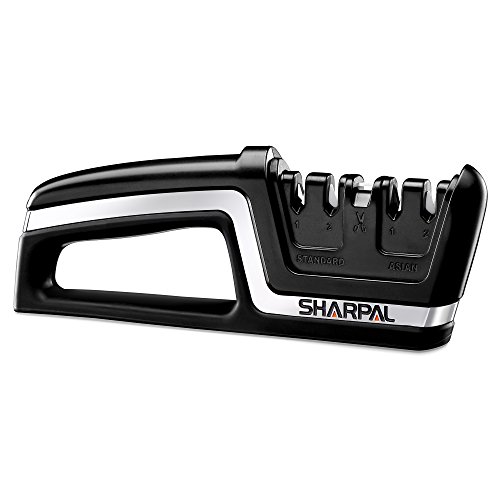
This 5-in-1 sharpener from SHARPAL offers versatility for a broad range of blades, including straight and serrated edges. It includes tungsten carbide and ceramic sharpening stages and a dedicated feature for scissors. The design emphasizes efficiency and speed, enabling rapid blade restoration while maintaining a safe sharpening process. Its multi-stage approach suits both home cooks and professionals who value a single, all-purpose tool.
KitchenIQ Edge Grip 2-Stage Sharpener

The KitchenIQ Edge Grip 2-Stage Sharpener emphasizes stability with a patented edge grip that anchors the unit on the edge of a table or countertop. It uses a carbide stage for coarse sharpening and a ceramic rod for fine honing, making it ideal for quick maintenance of serrated and straight-edge knives. Its compact design and soft-grip handle make it a practical option for small kitchens and busy cooks.
Buying Guide: How To Choose A Serrated Knife Sharpener
Important considerations
- Knife compatibility: Serrated versus straight-edge knives require sharpeners with dedicated serrated slots or diamond abrasives designed to renew serrations without damaging blade geometry.
- Sharpening stages: Multi-stage sharpeners provide a clear path from repair to polish. Look for models with at least three stages to handle damaged blades and recapture a clean edge.
- Edge consistency: Diamond abrasives offer durable, long-lasting sharpening action and precise results, especially for serrations. Carbide stages can set edges quickly for less demanding maintenance.
- Stability and safety: Suction bases, non-slip grips, and a stable footprint reduce the risk of slips during sharpening, particularly on serrated edges that can catch unexpectedly.
- Ergonomics and right/left-handed use: A comfortable handle and intuitive pull strokes help deliver consistent results without fatigue.
- Footprint and storage: Compact, lightweight sharpeners suit small kitchens, while portable options are handy for travel or outdoor use.
- Scissor sharpening: If you frequently maintain scissors, consider tools that include a dedicated scissor sharpening stage for added value.
Practical tips
- Follow the manufacturer’s recommended stroke count and direction to avoid removing too much metal from serrations.
- Test on an inexpensive knife first to understand how the serrations respond to each stage.
- Regular maintenance is more effective than aggressive, occasional sharpening; schedule routine touch-ups to preserve serrated edges.
- Store sharpeners away from children and ensure the sharp edges are protected when not in use.