For home bakers aiming to replicate the iconic, crisp-edged crust of pan pizzas, choosing the right pan matters. This guide highlights five prominent pans that excel at delivering even heat, moisture control, and easy serving. Each option suits different kitchen sizes, baking styles, and crust preferences, from perforated steel designs to seasoned pans that promote browning. Read on to compare features, performance, and practical considerations before you buy.
Choosing at a glance
| Product | Brand | Size / Type | Key Benefit |
|---|---|---|---|
| GoodCook AirPerfect Nonstick 16” Pizza Pan | GoodCook | 16″ perforated carbon steel | Even heating, moisture reduction, easy slicing guides |
| GoodCook AirPerfect Nonstick 16” Pizza Pan (Set of 2) | GoodCook | 15.75″ each; perforated, nonstick | Large family-sized surfaces, dual pans for versatility |
| Lloyd Pans Detroit Style Pizza Pan 10x14x2.5 | Lloyd Pans | 10″ x 14″ x 2.5″ | Pre-seasoned PSTK, stick resistant, durable |
| American Metalcraft TP14 Wide-Rim Pan | American Metalcraft | 14″ wide-rim | Even baking, raised edge for stability |
| Wilton Silver Non Stick 12″ Pizza Pan | Wilton | 12″ round | Nonstick surface, even heat distribution |
GoodCook AirPerfect 16” Pizza Pan

The 16″ perforated pan from GoodCook focuses on moisture control and even heating to achieve a crispy crust. Its design includes cutting guides for clean, uniform slices, and feet on the bottom to elevate the pan, minimizing surface heat damage to countertops. This pan is well-suited for homemade pizzas, frozen pies, and reheated leftovers that benefit from a crisper finish.
GoodCook AirPerfect 16” Pizza Pan (Set of 2)

This set provides two 15.75″ pans with the same perforated, air-insulated design. Having a second pan enables rotation for even baking on large pizzas or simultaneous baking of different crusts. The full-size baking surfaces handle family-sized pies, and built-in cutting guides help you portion evenly.
Lloyd Pans Detroit Style Pizza Pan

Detroit-style pizzas are known for their crisp, caramelized edges. This pan by Lloyd Pans features a PSTK finish that offers stick resistance and is metal utensil safe. It provides a sturdy bake with reliable heat distribution, making it a strong choice for classic, thick-crust Detroit pies or other deep-dish experiments.
American Metalcraft TP14 Wide-Rim Pan

The 14″ wide-rim pan from American Metalcraft balances a raised edge with an even baking surface. This design helps keep toppings from sliding while ensuring crusts bake uniformly. It’s a practical option for those prioritizing easy release and simple cleanup, especially for everyday pizza nights.
Wilton Silver Non Stick 12″ Pizza Pan
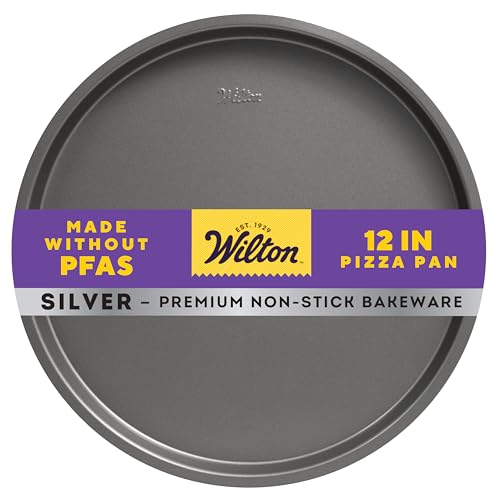
Wilton’s 12″ pan offers a durable nonstick surface and even heat distribution typical of cold-rolled steel. Its nonstick coating promotes easy food release, making cleanup quick after baking and reheating pizzas, flatbreads, or even cookies on the same tray. This size is ideal for smaller households or personal-sized pizzas.
Buying Guide: Key Factors To Consider
Selecting the right pan for pan pizza depends on several factors, including pan material, size, thickness, and coating. Aluminum and carbon steel are common choices; carbon steel heats quickly and yields good browning, while aluminum offers lighter weight and even heat spread. Perforated pans promote moisture escape for crisper crusts, but they may require slight adjustments in bake time to avoid undercooking toppings. Nonstick coatings simplify release but may deteriorate with high heat or abrasive cleaning. For thick, Detroit-style pies, deeper pans with sturdy construction are advantageous. Consider storage space, dishwasher compatibility, and how many pizzas you typically bake at once. If you bake frequently with frozen pies, perforated, air-insulated options can help maintain a crisp crust without overbaking the toppings. For families or meal-prep, sets of two pans provide flexibility to rotate pans and manage multiple pies efficiently. Finally, look for features like cutting guides, raised rims, and feet that elevate heat away from countertops, protecting surfaces and improving handling.
Two common approaches emerge. Perforated, high-heat pans are ideal for achieving a distinctly crispy crust on both homemade and reheated pizzas. Nonstick surfaces simplify cleanup and release, especially for delicate toppings or cheese-laden pies. For classic thick crusts, consider deeper, wide-rim designs that maintain structural integrity while baking evenly. Durability and oven tolerance (for example, up to 450°F or higher) should align with your usual baking temperatures. Balancing size, weight, and price helps ensure a pan that fits your kitchen workflow and pizza ambitions.