Choosing the best paring knife for small, precise tasks requires balancing blade quality, ergonomics, and durability. This guide highlights five top options suited for American kitchens, from German steel classics to Japanese VG10 blades. Each pick excels at peeling, trimming, and garnishing, helping you perform delicate work with confidence.
Summary of featured products:
| Product | Brand | Notable Features |
|---|---|---|
| IGNITED CUTLERY 5 inch Paring Knife | IGNITED CUTLERY | German 1.4116 steel, full-tang, comfort grip |
| Mercer Culinary M23540 Renaissance 3.5-Inch Paring Knife | Mercer Culinary | High-carbon German steel, triple riveted handle |
| Mercer Culinary M22003 Millennia 3.5-Inch Paring Knife | Mercer Culinary | One-piece high-carbon Japanese steel, ergonomic grip |
| KYOKU Paring Knife – 3.5″ Shogun Series | KYOKU | VG10 Damascus blade, Cryogenic treatment, protective sheath |
| KEEMAKE 3.5 Inch Paring Knife | KEEMAKE | High carbon stainless steel, ergonomic Pakkawood handle |
IGNITED CUTLERY 5 Inch Paring Knife
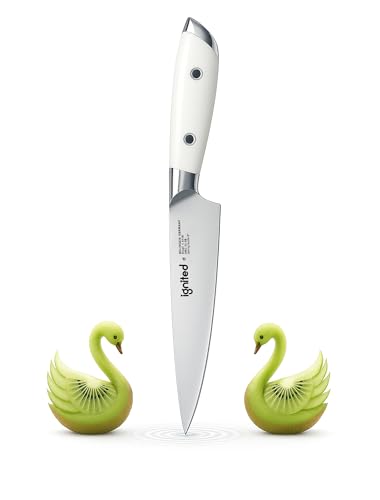
The 5-inch IGNITED CUTLERY paring knife offers a versatile tool for precise prep tasks, including slicing small fruits, trimming mushrooms, and mincing garlic. Its compact blade supports intricate control, while the full-tang construction enhances strength and balance. The knife is crafted from tight-grained, high-carbon German 1.4116 steel, contributing to edge retention and stain resistance. The slim, ergonomic handle provides a comfortable and secure grip, helping the knife feel like an extension of the hand during detailed work. This model ships with a gift box, enhancing its suitability as a gift for aspiring chefs or home cooks.
Mercer Culinary Renaissance 3.5-Inch Paring Knife

Mercer Culinary’s Renaissance 3.5-inch paring knife emphasizes precision in small cuts. It is precision-forged with high-carbon German cutlery steel to achieve long-lasting sharpness. The triple-riveted, ergonomic handle is designed for durability and comfort, while a rounded spine provides a smooth grip. It’s ideal for garnishes, deveining shrimp, trimming beans, and slicing mangos—tasks that demand careful control and a steady hand.
Mercer Culinary M22003 Millennia Paring Knife

The Mercer Millennia 3.5-inch paring knife features a one-piece high-carbon Japanese steel blade, designed for easy edge maintenance and lasting sharpness. Its ergonomic handle includes textured finger points to provide a non-slip grip, enhancing safety and control during delicate tasks such as garnishing, seeding jalapeños, or trimming beans. Built to withstand routine kitchen use, this knife balances performance with comfort for extended prep sessions.
KEEMAKE 3.5 Inch Paring Knife
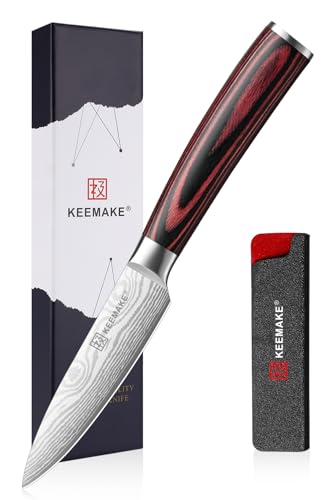
KEEMAKE’s 3.5-inch paring knife uses high carbon stainless steel to deliver razor-sharp precision for peeling and slicing. The ergonomic Pakkawood handle provides a comfortable, secure grip for extended use, reducing hand fatigue. This knife supports a wide range of kitchen tasks, from deveining shrimp to detailing fruit decorations, making it a versatile choice for daily prep work. Its compact blade makes fine control accessible for both beginners and seasoned cooks.
Buying Guide
Key considerations when choosing a paring knife include steel type, blade geometry, handle design, and maintenance needs. German steel blades (like 1.4116 or 3Cr13MoV) typically emphasize edge retention and durability, while Japanese blades (such as VG10 Damascus) prioritize extreme sharpness and fine slices. A full-tang construction generally offers better balance and strength than a tang-only knife.
Blade length for paring knives usually ranges from 3.0 to 5.0 inches. A 3.5-inch blade is a common compromise between control and reach for most delicate tasks. Ergonomic handles with non-slip textures help maintain control during precision work, especially when working with slippery fruits or vegetables. Some sets include knife sheaths or gift boxes, which can be beneficial for storage and gifting.
Maintenance matters. High-carbon stainless steels hold edges well but may require more careful drying to prevent corrosion. Some knives benefit from regular honing and periodic sharpening to maintain an ultra-fine edge. For users with limited space, a compact paring knife can be paired with a sharper that targets high-precision cuts in a streamlined setup.
Price and value should be weighed against performance, warranty, and intended use. For professional kitchens, investing in a high-quality paring knife with solid edge retention and a comfortable grip can improve consistency in garnishing and delicate prep work. For casual home cooks, mid-range options often provide excellent performance with minimal maintenance.
In summary, the five highlighted paring knives cover a spectrum of materials and ergonomic designs while delivering reliable precision for daily kitchen tasks. When choosing, consider your preferred balance of edge longevity, ease of maintenance, and how the knife feels in your hand during extended prep sessions.