Crafting jam at home is a rewarding process that rewards the right pan. The following maslin pans and jam pots are selected for durability, heat distribution, and ease of use across American kitchens. Each option supports even simmering, precise pouring, and reliable results whether you’re making fruit preserves, marmalade, or chutneys. Below you’ll find five well-ranked choices with distinctive features to fit different cooking styles and spaces.
| Product | Brand | Approx. Capacity |
|---|---|---|
| Large Maslin Pan Jam Making Pot with Stainless Steel Jam Chutney Funnel | Megaware | Unknown (Maslin Pot size varies) |
| Jam Making Maslin Pan Stainless Steel Preserve Pot & Handle Bucket | i Kito | 9 L |
| Penguin Home 5L Maslin Pan with 14cm Wide Neck Jam Funnel | Penguin Home | 5 L |
| 2-Quart Handmade Pure Copper Jam Pot | LD HuYY | 2 Qt |
| Cuisine Romefort Copper Jam Pot 15 In | Cuisine Romefort | 9.5 Qt |
The following selections emphasize heat distribution, capacity for batches, and compatibility with common canning practices. Use this guide to compare material choices (stainless steel, copper, and cast copper), lid and spout designs, and the convenience features that help prevent scorching or spills during jam-making sessions.
Megaware Maslin Jam Pot With Funnel

The Megaware maslin pot is built from 18/8 stainless steel, providing durability for years of use. It includes a canning funnel, making transfer to jars straightforward and cleaner. The pot features a visible graduated internal scale in both metric and imperial units, aiding precise measurements during jam, marmalade, chutney, or stock preparation. The pour spout and side-handle design assist controlled pouring, while a riveted fold-down carry handle supports safe lifting and transport. This set is dishwasher safe, simplifying cleanup after busy canning sessions.
i Kito Jam Making Maslin Pan

Constructed from high-quality Grade 304 stainless steel, this 9 L (2.4 gallon) maslin pan serves as a versatile option for jam, marmalade, and chutney. The inner markings provide imperial and metric graduations for accurate cooking, while a pouring spout and two handles (carry and helper) facilitate safe pouring of hot contents. The pan’s mirror-polished surface resists corrosion and its three-layer base supports even heat distribution, reducing hot spots during long simmering. The pan can also double as a stockpot or outdoor cooking vessel in camp settings, making it a multipurpose kitchen tool.
Penguin Home 5L Maslin Pan Kit
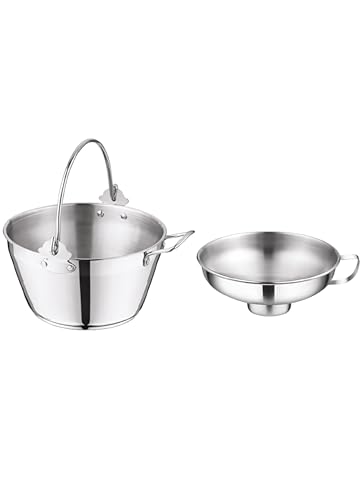
This 5-liter stainless steel maslin pan ships with a 14 cm wide-neck jam funnel, forming a complete preserving setup. Both components are designed for rust resistance and durability, supporting reliable performance across home canning tasks. The wide neck eases transferring liquids and solids, from jam mixtures to grains, with reduced risk of splashing. The stainless construction is compatible with a variety of cookware setups and heat sources, making it a practical choice for hobby canners seeking a simple, all-in-one solution.
2-Quart Copper Jam Pot by LD HuYY

This solid copper jam pot emphasizes superior heat conduction with a 2 mm thick rim for quick and even heating. Copper’s thermal properties support precise temperature control, essential for achieving the right jam texture. The design includes a built-in triangular pouring spout for easy, mess-free transfer to jars. The pot’s surface is finished for a clean appearance and easy maintenance, and its compact 2-quart capacity is ideal for smaller batches or experiments in flavor combinations.
Cuisine Romefort Copper Jam Pot

From France, this copper jam pot emphasizes tradition and quality, featuring pure copper with cast iron handles riveted to the copper. Copper’s prime heat conduction ensures even cooking for jams and desserts, while the sturdy handles support safe maneuvering of hot contents. The pot is recommended for careful hand-cleaning and drying after use, with attention to maintaining copper’s finish. Its generous 9.5-quart capacity makes it suitable for larger batches and family preserves that require longer simmer times.
Buying Guide: Key Purchase Considerations for Jam Pots
- Material and heat distribution: Stainless steel offers durability and easy cleaning, copper provides rapid, even heating but requires care to maintain finish, and combination bases can balance both traits. Consider your stove type (gas, electric, induction) when selecting.
- Capacity and batch size: Smaller pots (2–5 L) suit quick jams and single-family batches; larger pots (9–15 Qt) enable bigger runs of preserves and canning sessions. Think about your typical batch size and storage capacity.
- Pouring and handling features: Look for spouts, side handles, and helper handles that reduce risk during transfer of hot jams. A wide neck or funnel simplifies filling jars and minimizes spills.
- Internal markings and measurements: Graduations in metric and imperial units help manage recipes precisely, preserving flavor and texture across batches.
- Maintenance and care: Stainless steel is generally dishwasher safe and easy to sanitize. Copper pots require manual cleaning and polishing to maintain appearance and prevent tarnish. Consider your willingness to perform maintenance after canning sessions.
- Longevity and compatibility: Pots with durable riveted handles and sturdy bases are more comfortable for repeated use. Check compatibility with your cooktop: induction-ready bases are necessary for some options.
- Accessories and included tools: Some sets come with funnels, jar lifters, or racks. Evaluate whether you need a complete canning kit or prefer to assemble components separately.
- Cleaning and storage: Larger pots may take up more cabinet space. Stackable designs or nesting options can help reduce clutter when you have several pots.
- Cost versus value: While copper pots may dominate in heat control, stainless steel options often offer lower maintenance costs. Balance your budget with your jam-making frequency and culinary goals.
- Safety considerations: Ensure your pot has sturdy handles, a reliable lid design, and spouts that minimize splatter. If you’re new to canning, consider pots with established reputations for reliability and consistent performance.