Choosing the right smoke detector for a kitchen area involves balancing fast smoke detection with minimizing nuisance alarms from cooking. The models below emphasize photoelectric sensing, reliable battery life, and features designed to reduce false alarms. This guide highlights five top choices from reputable brands that perform well in homes, apartments, and small offices with cooking zones.
Overview of selected products:
| Product | Brand | Key Benefit |
|---|---|---|
| First Alert SMI100, Battery-Operated Smoke Alarm, 2-Pack | First Alert | Easy installation; precision detection; battery-powered |
| First Alert Combination Smoke & Carbon Monoxide Alarm, SMCO100 | First Alert | 2-in-1 protection; battery-operated convenience |
| Kidde P3010K-CO Worry-Free Kitchen Alarm | Kidde | 10-year sealed battery; photoelectric + CO sensor |
| Kidde 10-Year Battery Powered Smoke Detector | Kidde | Long-life 10-year battery; reduced false alarms |
| Ecoey FJ125A 10-Year Battery Photoelectric Detector | Ecoey | UL listed; compact design; long-life battery |
First Alert SMI100, Battery-Operated Smoke Alarm, 2-Pack

First Alert’s SMI100 uses Precision Detection technology to reduce cooking nuisance alarms while delivering early warning during a home fire. This battery-operated model offers straightforward installation and maintenance, with a front-access battery compartment for easy replacements. Its dual-pack is ideal for kitchens adjacent rooms or multi-level homes, ensuring consistent protection without hardwiring requirements. The unit aligns with consumer safety standards and emphasizes reliability in everyday cooking environments.
First Alert Combination Smoke & Carbon Monoxide Alarm, SMCO100

This 2-in-1 device provides smoke and carbon monoxide monitoring with a single unit, designed for easy installation in kitchens and living areas. Precision Detection helps minimize false positives from cooking while maintaining early CO and smoke alerts. Battery-operated convenience makes setup straightforward for renters or homes without existing electrical wiring. The product focuses on reliable, combined protection in areas where both fires and gas hazards may occur.
1 Pack Smoke and Carbon Monoxide Detector with LCD Display (OLUNCLE)
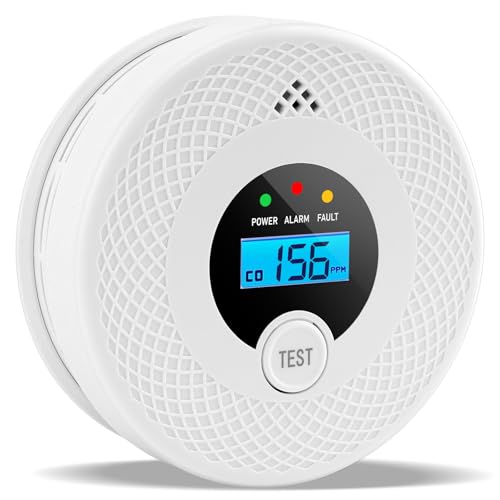
This model combines a photoelectric sensor for smoke with an electrochemical CO sensor, delivering early warnings. The large LCD display shows real-time readings, while standby mode conserves battery life with a green LED indicator. The 85dB alarm and red LED flashes provide a clear alert during smoke or CO events. It is particularly useful for kitchens seeking visible, easy-to-read status information alongside protection.
Kidde Smoke Detector, 10-Year Battery Powered

This model emphasizes a sealed 10-year battery, eliminating typical low-battery chirps and battery changes. It features an 85-decibel alarm with a clear visual indicator, and its enhanced sensing technology helps reduce false alarms from cooking while maintaining UL standards compliance. A long-term choice for kitchens where minimal maintenance is preferred, this detector favors steady, ongoing protection.
First Alert SMI100, Battery-Operated Smoke Alarm

This is another First Alert option with Precision Detection designed to cut cooking nuisance alarms. The unit is battery-powered, enabling easy placement where hard-wiring isn’t feasible. Front access battery compartments simplify replacements. By combining simple operation with advanced sensing, the SMI100 is well-suited for kitchens that require dependable protection without plumbing or wiring changes.
Buying Guide: Key Purchase Considerations
- Sensor Type and Placement: Photoelectric sensors are generally better at detecting slow, smoldering fires common in kitchens, reducing false triggers from cooking. Consider placing detectors on every level and near sleeping areas for comprehensive protection.
- Power Source: Battery-operated detectors offer flexible placement and easier installation, especially in rentals. Hardwired models with battery backup provide continuous protection during power outages but require electrical work for installation.
- Sealed vs. Replaceable Batteries: Sealed 10-year batteries reduce maintenance, but you should verify the model’s replacement requirements and warranty terms. Replaceable batteries allow ongoing replacement but require upkeep.
- Alarms and Alerts: Look for audible alerts of at least 85 dB and visual indicators (LED) to ensure visibility. Some models include LCD displays or test/silence buttons for easier maintenance.
- Combination CO Alarms: In kitchens or near fuel-burning appliances, CO alarms add an extra layer of protection. Ensure the device is UL-listed for CO and smoke monitoring and properly spaced from cooking zones to minimize nuisance alarms.
- Maintenance: Regular testing, battery checks, and cleaning help maintain performance. Front-access battery compartments, simple test buttons, and clear status indicators facilitate ongoing upkeep.
- Lifespan and Warranty: Ten-year battery units minimize maintenance but ensure you understand the warranty and what is covered. UL standards compliance is essential for reliability and safety.
- Installation Guidelines: Place detectors on the ceiling or high on walls, per manufacturer recommendations. Keep units at least 10 feet from cooking appliances to minimize nuisance alarms while maintaining early detection.
Comparative Outlook
- Best for low-maintenance: Models with 10-year sealed batteries reduce routine upkeep and battery checks.
- Best for dual protection: Combination smoke and CO alarms are ideal for kitchens with multiple hazard concerns.
- Best for renter-friendly setups: Battery-operated units with easy-to-reach battery compartments simplify placement and replacement.
- Best for compact spaces: Mini-sized detectors fit kitchen areas without crowding ceiling space and still provide reliable sensing.
- Best for visibility: Models with LCD displays and clear status indicators help users monitor conditions at a glance.